L’être humain : des sociétés primitives à nos jours


- Catégorie
- Leçons au Musée guidées par des éducatrices
- Durée
-
30 minutes en galerie + 30 minutes en labo
- Public
- Éducateurs, En français, Groupes scolaires
- Âge
-
5+
- Classe
- 12, Maternelle
- Sujets
- Arts et culture, Canada, Histoire, Intérêt général, Sciences, Sciences sociales et humaines, Études autochtones, Études sociales
À propos de cette leçon
Découvrez les histoires, les objets, les savoir-faire et les traditions qui témoignent des façons dont les peuples du monde entier expriment leur identité, tissent des liens communautaires et entretiennent des connexions à travers le temps et l’espace.
Que signifie être humain ?

Cette leçon invite les élèves à examiner comment des personnes à travers le monde et à travers le temps — de l’histoire ancienne à nos jours — ont exprimé leur identité, construit des communautés et adapté à leur environnement. À travers des discussions basées sur l’enquête, des visites de galeries et un apprentissage pratique avec des objets et des biens, les élèves examineront des thèmes tels que la nourriture, les vêtements, le jeu, la communication et les traditions.
Les élèves sont encouragés à examiner en profondeur des perspectives diverses, à établir des liens avec leurs propres expériences et à développer une compréhension plus profonde des histoires humaines qui nous relient à travers le temps et l’espace.
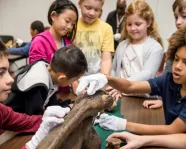
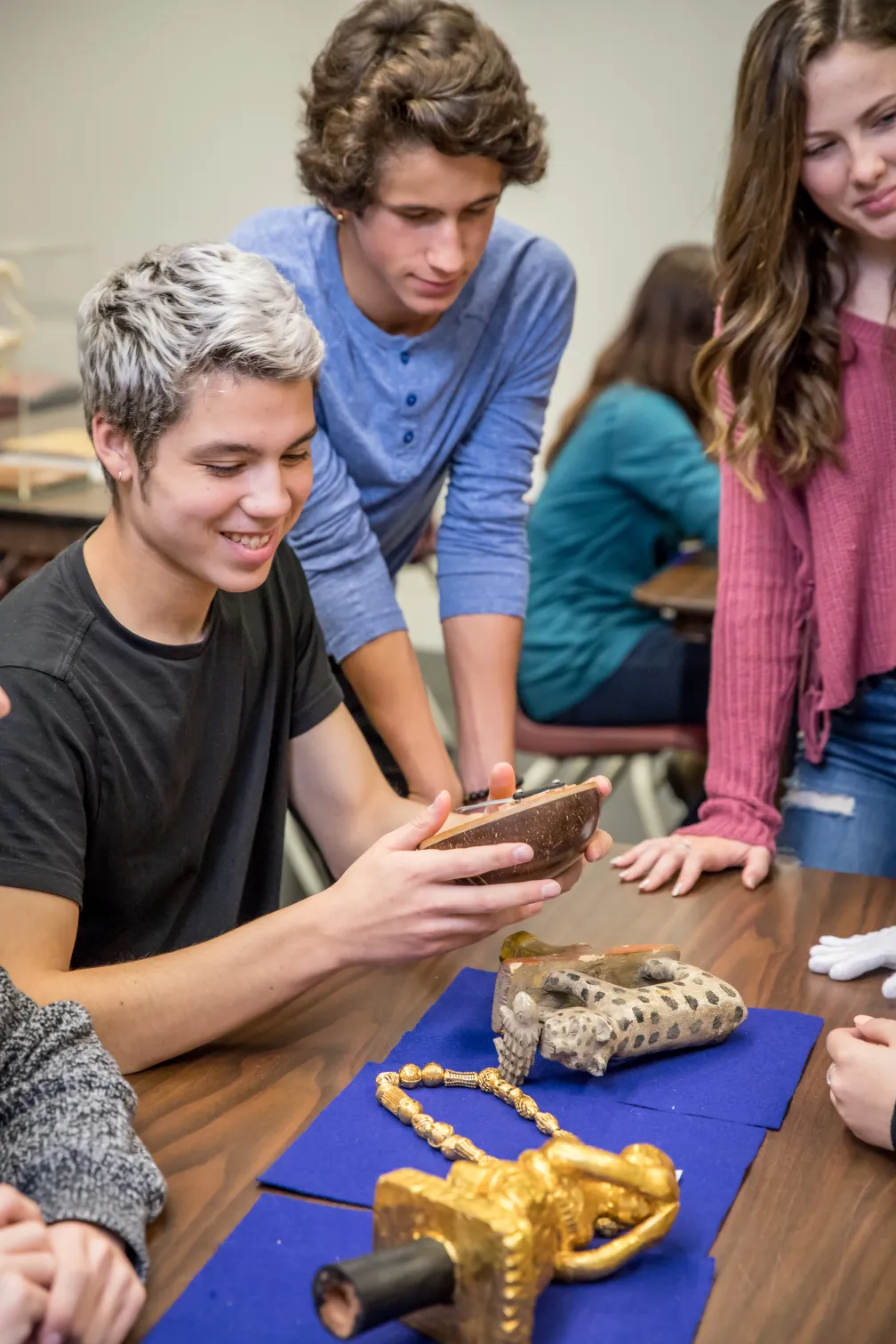
Dans une ou deux galeries sélectionnées, les élèves participeront à des discussions axées sur la recherche avec les éducatrices du ROM. Ils exploreront les collections en établissant des liens avec leurs propres expériences, leurs perspectives et le thème de la leçon. Celle-ci comprendra également une activité d’apprentissage animée au cours de laquelle les élèves pourront manipuler des objets authentiques, notamment des artefacts provenant de l’Égypte ancienne, de la vallée de l’Indus, du Japon du 19ᵉ siècle et de nombreuses autres périodes et régions du monde.
Les élèves du secondaire approfondiront également leurs connaissances sur le rôle de l’impérialisme et de la colonisation dans la manière dont nous apprenons l’histoire, en mettant l’accent sur les périodes historiques pertinentes pour leur niveau scolaire.
| Langue | Leçon offerte en anglais et en français. |
|---|---|
| Horaires de la leçon | 10 h 30 et 12 h 15 |
| Activités |
|
| Galeries/Espaces | La vie en péril / Égypte / Arts et cultures des Premiers Peuples / Afrique, Amériques et Asie-Pacifique / Grèce |
| Mode de présentation | Leçon en galerie + laboratoire |
| Durée | 30 minutes en galerie + 30 minutes en laboratoire |
| Tarif | 18,50 $/personne (gratuit pour les élèves des Premières Nations, Inuits et Métis) |
| Nombre minimum par groupe | 15 |
| Nombre maximum par groupe | 35 |
Objectifs d'apprentissage : Maternelle et jardin d’enfants - 2e année
Saisir comment étudier diverses cultures anciennes peut nous aider à mieux comprendre le présent et l’avenir.
Reconnaître que les défis sociaux et environnementaux ont façonné les communautés humaines à travers les âges, et continuent de le faire.
Explorer l’influence réciproque de l’activité humaine et de l’environnement à travers les époques et apprendre à évaluer les différentes sources d’information sur le passé.
3e année - 12e année
Saisir comment étudier diverses cultures anciennes peut nous aider à mieux comprendre le présent et l’avenir.
Reconnaître que les défis sociaux et environnementaux ont façonné les communautés humaines à travers les âges, et continuent de le faire.
Explorer l’influence réciproque de l’activité humaine et de l’environnement à travers les époques et apprendre à évaluer les différentes sources d’information sur le passé.
Apprentissage au ROM

Ce qui distingue nos leçons, c’est qu’elles sont animées par des éducatrices du Musée possédant une expertise dans divers domaines. Celles-ci élaborent des plans de cours sur mesure à partir d’objectifs d’apprentissage précis.
Cette approche leur offre la souplesse nécessaire pour s’adapter aux intérêts des élèves et nourrir leur curiosité, tout en répondant aux besoins particuliers de chaque groupe et aux réalités changeantes d’un musée vivant et dynamique. Elle leur permet également d’intégrer les plus récentes avancées de la recherche, les meilleures pratiques pédagogiques et les nouvelles technologies.
Nous reconnaissons aussi l’importance d’apprendre à partir d’objets authentiques autant que possible, plutôt que de s’appuyer uniquement sur des modèles ou des reproductions. Même lors des activités en galerie, nos éducatrices saisissent chaque occasion d’offrir aux élèves une expérience d’apprentissage concrète au contact d’objets réels, porteurs d’histoires et de savoirs.
Grâce à ces approches pédagogiques éprouvées, aucune leçon ne ressemble tout à fait à une autre. Elles demeurent toutefois toujours engageantes, interactives et mémorables.
Faits saillants




Liens avec le curriculum
Notions fondamentales de la langue et des mathématiques
- Communication orale et non verbale
Résolution de problèmes et innovation
- Exploration d’environnements
Autorégulation et bien-être
- Habiletés sociales
- Autorégulation
- Participation active
Appartenance et contribution
- Compréhension des perspectives et de l’identité canadienne
- Conscience de la communauté
- Respect et protection de l’environnement
Science
- Habiletés liées aux STIM et liens connexes
- Systèmes vivants – Les êtres vivants : caractéristiques et besoins
- Structures et mécanismes – Les matériaux, les objets et les structures au quotidien
- Systèmes de la Terre et de l’espace – Le cycle des jours et des saisons
Études sociales
- Patrimoine et identité – Les rôles et les responsabilités
- Communauté et environnement – La communauté locale
Sciences
- Habiletés liées aux STIM et liens connexes
- Systèmes vivants – Les animaux : croissance et changements
Études sociales
- Patrimoine et identité – Les traditions familiales et communautaires
- Communauté et environnement – Les communautés du monde
Études sociales
- Patrimoine et identité – Les communautés du Canada, 1780 à 1850
- Patrimoine et identité – Communauté et environnement : Personnes et environnement
Études sociales
- Patrimoine et identité – Les sociétés anciennes (jusqu'à 1500 EC)
Études sociales
- Patrimoine et identité – Les interactions entre les communautés autochtones, et entre celles-ci et les Européens sur le territoire qui deviendra le Canada (avant 1713)
Études sociales
- Patrimoine et identité – L’expérience canadienne hier et aujourd’hui
Histoire
- La Nouvelle-France et l'Amérique du Nord britannique, 1713–1800
- Conflits et défis au Canada, 1800–1850
Histoire
- Création du Canada, 1850–1890
- Le Canada, 1890–1914 : Une société en évolution
Sciences humaines et sociales
- Exploration des études familiales
Sciences humaines et sociales
- Exploration des études familiales
Sciences humaines et sociales
- Introduction à la psychologie, à la sociologie et à l’anthropologie
Études canadiennes et mondiales
- Histoire mondiale jusqu’à la fin du 15ᵉ siècle
Études canadiennes et mondiales
- Aventures en histoire mondiale
Sciences humaines et sociales
- Cultures de la francophonie mondiale
Études classiques et langues internationales
- Civilisations grecque et romaine
À noter
Pendant les travaux pratiques, les élèves ont l’occasion de manipuler de nombreux objets, dont certains sont lourds. Si un élève échappe un objet qu’il tient, il peut se blesser, blesser les autres ou endommager des objets dans les collections. Merci de rappeler à vos élèves l’importance de manipuler les objets avec soins lors de leur visite et de les surveiller.
Activités connexes