Being Human: From Ancient and Early Societies to Today


- Category
- Onsite Lessons with Museum Educators
- Duration
-
30 min gallery + 30 min lab
- Audience
- Educators, French Presentation, Schools
- Age
-
5+
- Grades
- 1-12, Kindergarten
- Subjects
- Art & Culture, Canada, General, History, Indigenous, Science, Social Sciences & Humanities, Social Studies
About this lesson
Experience the stories, objects, belongings, and traditions that reveal how people around the world express identity, build community, and connect across time and place.

What does it mean to be human?
This lesson invites students to explore how people around the world and throughout time -- from ancient history to the present day -- have expressed identity, built communities, and adapted to their environments. Through inquiry-based discussions, gallery visits, and hands-on learning with objects and belongings, students will examine themes such as food, clothing, play, communication, and traditions.
Students are encouraged to explore diverse perspectives, make connections to their own experiences, and develop a deeper understanding of the human stories that connect us across time and place.
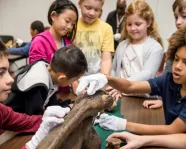
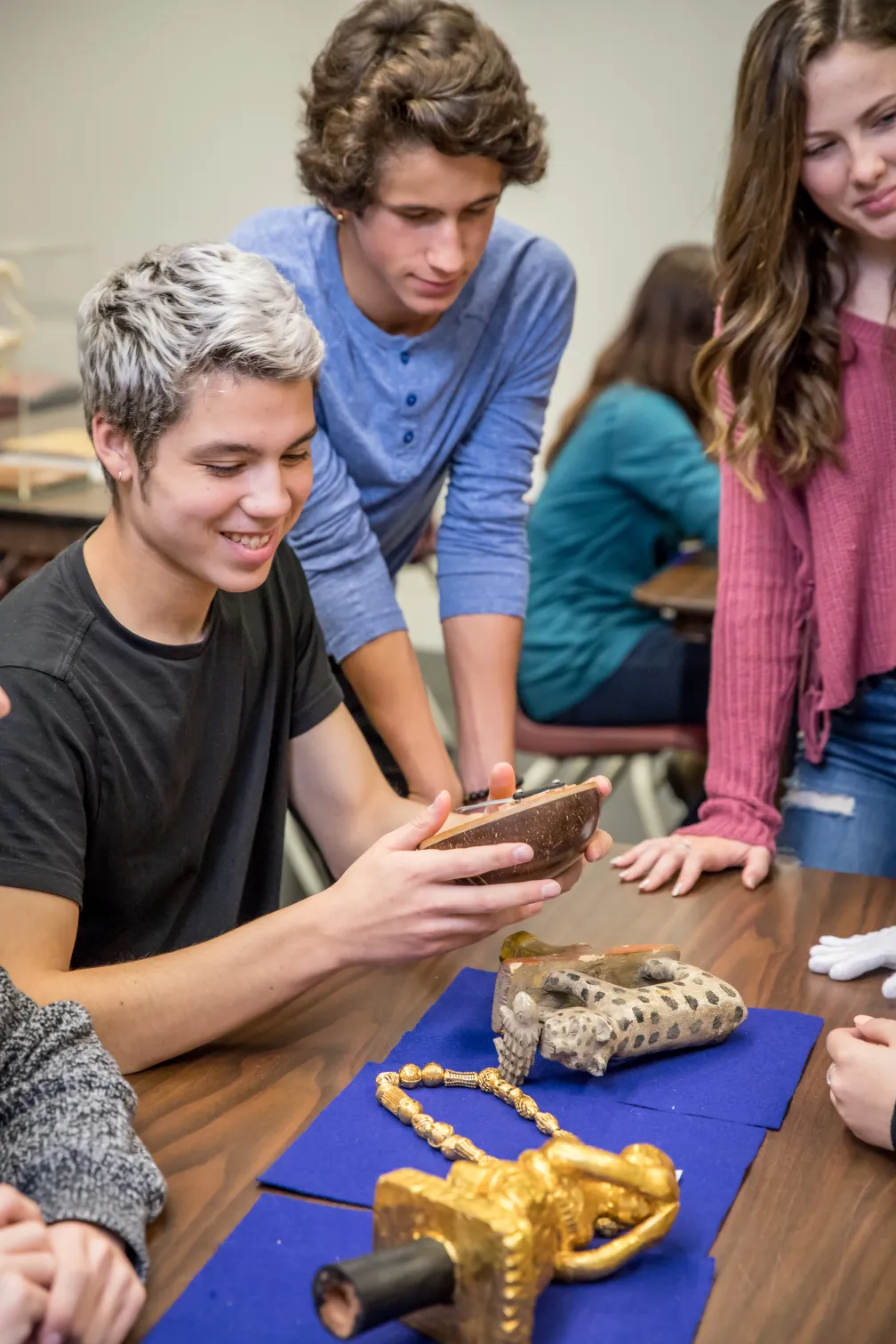
In one or two selected galleries, students will participate in inquiry-based discussions with ROM Educators, engaging with the collections and connecting them to their own experiences and perspectives and the lesson’s theme. The lesson will also include a facilitated learning session where students will have the chance to engage with real objects and belongings that may include examples from Ancient Egypt, the Indus Valley, 1800s Japan, or from many other places and points in history.
Secondary students will also learn more about the role of imperialism and colonization in the way we learn history, with a focus on grade-relevant time periods.
| Delivery Language | This lesson is offered in English and French. |
|---|---|
| Lesson Times | 10:30 AM, 12:15 PM |
| Activities |
|
| Galleries/Location | Life in Crisis, Egypt, First Peoples Art & Culture, AAAP, Greece |
| Format | Gallery & Lab Lesson |
| Duration | 30 min gallery + 30 min lab |
| Pricing | $18.50/person (Free for First Nations, Inuit, and Métis students) |
| Minimum Group | 15 |
| Maximum Group | 35 |
Learning Goals: K-2
Demonstrate connections between the self, community(ies) and the natural environment
Investigate how all living things, including humans, adapt physically, culturally and evolutionarily to survive and thrive in their environments
Describe practical applications of science, technology, and innovations in relation to human existence and experiences
Learning Goals: 3-12
Understand how studying diverse cultures from the past helps us better understand the present and future
Recognize that social and environmental challenges have shaped human communities throughout history and continue to do so today
Explore how human activity and the environment influence each other across time, and learn to evaluate different sources of information about the past
Learning at ROM

What makes a lesson at ROM unique is that they are taught by trained Museum Educators with diverse areas of specialization who develop personalized lesson plans around set learning goals.
This allows them the flexibility and adaptability to meet student interests and follow where their curiosity leads, respond to class needs and ever-changing conditions in the dynamic environment of a busy Museum, and incorporate the latest studies, pedagogies, and technologies.
We also understand the value of learning from the real thing whenever possible, not relying exclusively on models and copies. Even in gallery lessons, Educators take every opportunity to let your students engage in hands-on learning with something real that has its own history and stories to tell.
These tested approaches to learning mean that you may never get the same lesson twice, but they will always be engaging, interactive, and memorable.
Highlights




Curriculum Connections
Foundations of Language and Mathematics
- Oral and Non-Verbal Communication
Problem Solving and Innovating
- Exploring Environment
Self-Regulation and Well-Being
- Social Skills
- Self-Regulation
- Active Participation
Belonging and Contributing
- Understanding Perspectives and Canadian Identity
- People and Communities
- Respect and Care for Nature
Science
- STEM Skills and Connections
- Life Systems: Needs and Characteristics of Living Things
- Structures and Mechanisms: Everyday Materials, Objects, and Structures
- Earth and Space Systems: Daily and Seasonal Changes
Social Studies
- Heritage and Identity: Our Changing Roles and Responsibilities
- People and Environments: The Local Community
Science
- STEM Skills and Connections
- Life Systems: Growth and Changes in Animals
Social Studies
- Heritage and Identity: Changing Family and Community Traditions
- People and Environments: Global Communities
Social Studies
- Heritage and Identity: Communities in Canada, 1780–1850
- Heritage and Identity: People and Environments: Living and Working in Ontario
Social Studies
- Heritage and Identity: Early Societies to 1500 CE
Social Studies
- Heritage and Identity: Interactions of Indigenous Peoples and Europeans prior to 1713, in What Would Eventually Become Canada
Social Studies
- Heritage and Identity: Communities in Canada, Past and Present
History
- New France and British North America, 1713–1800
- Canada, 1800–1850: Conflict and Challenges
History
- Creating Canada, 1850–1890
- Canada, 1890–1914: A Changing Society
Social Sciences and Humanities
- Exploring Family Studies
Social Sciences and Humanities
- Exploring Family Studies
Social Sciences and Humanities
- Introduction to Anthropology, Psychology, and Sociology
Canadian and World Studies
- World History to the End of the Fifteenth Century
Canadian and World Studies
- Adventures in World History
Social Sciences and Humanities
- World Cultures
Classical Studies and International Languages
- Classical Civilization
Please Note
During the hands-on labs, students have the opportunity to interact with many objects, some of which are heavy. If a student lifts and drops an object, it may result in injury to themselves, to others, or to the collections. Please ensure students are following safety instructions and handling objects responsibly.
Related activities