Dinosaurs and Ancient Life


- Category
- Onsite Lessons with Museum Educators
- Duration
-
30 min gallery + 30 min lab
- Audience
- Educators, French Presentation, Schools
- Age
-
5+
- Grades
- 1-12, Kindergarten
- Subjects
- General, Science
About this Lesson
Gain a better understanding of biodiversity today by learning about the giants (and not-so-giants) of the ancient past.
Why do scientists study ancient ecosystems to understand the diversity of life and how dinosaurs and other organisms adapt to changing environments?

Dinosaurs and other prehistoric creatures have fascinated visitors of all ages since ROM first opened its doors.
Engage students’ curiosity about these amazing animals in this lesson that showcases some of the most iconic fossils housed in collections at ROM. There are too many to see them all in one visit, but your lesson may include favorites such as Tyrannosaurus rex, a variety of duckbilled hadrosaurs, or the famously not-a-dinosaur, Dimetrodon.
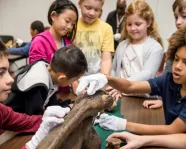
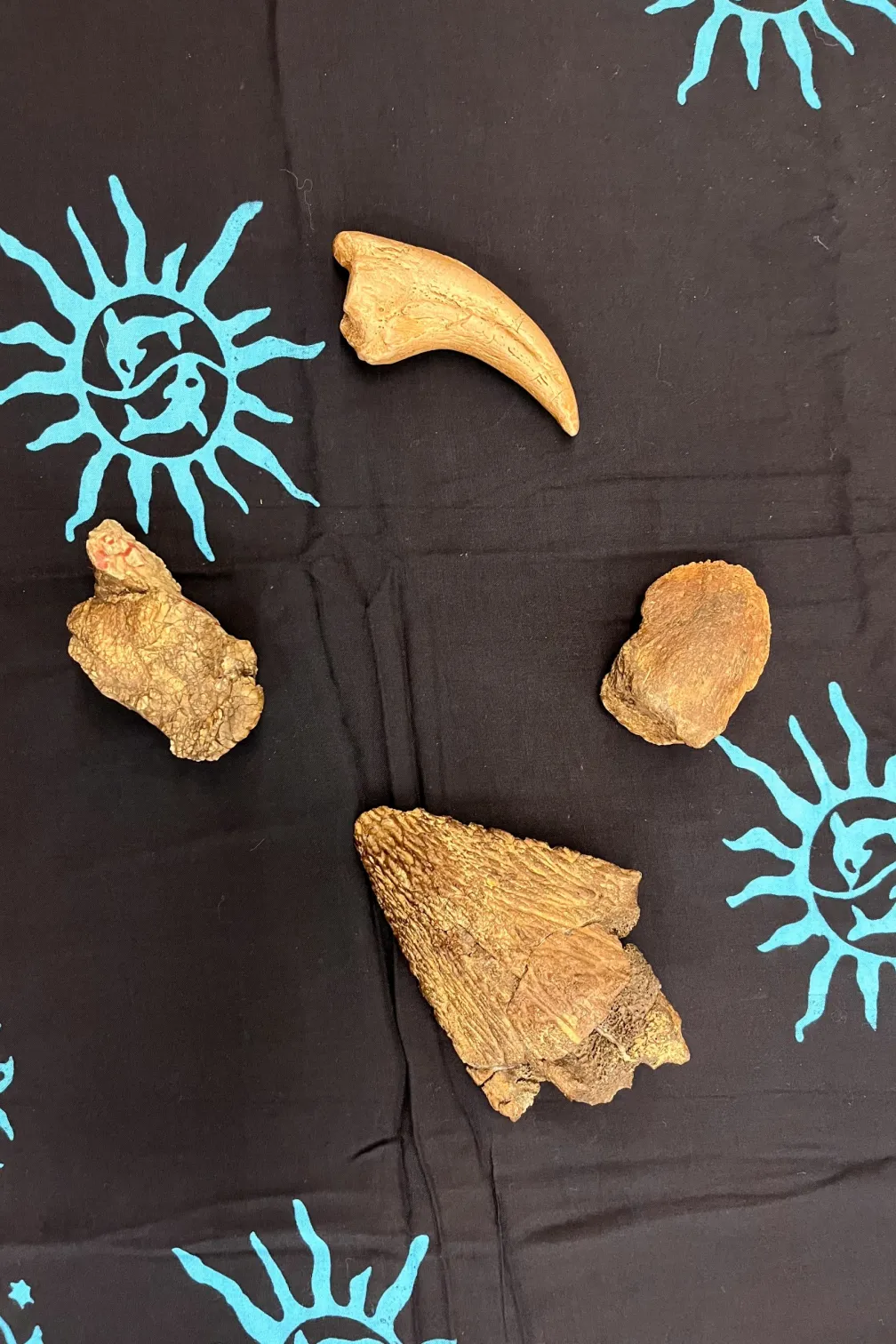
Students will participate in several different activities to better understand these ancient creatures. In the gallery, younger students may be invited to stretch, move, or dance like a dinosaur, while older students will study skeletal features to discover the roles played by different organisms in their habitats and communities. In the lab, all students will have the opportunity to touch fossils that are millions of years old to fully understand the range of prehistoric biodiversity.
By learning more about the dinosaurs of the past (and present – really!) and comparing them to other groups of animals, students will gain a better understanding of biodiversity and the interactions between living things and their environment.
| Delivery Language | This lesson is offered in English and French |
|---|---|
| Lesson Times | 10:30 AM, 12:15 PM |
| Activities |
|
| Format | Gallery & Lab Lesson |
| Galleries/Location | Dawn of Life, The Age of Dinosaurs, Age of Mammals |
| Duration | 30 min gallery + 30 min lab |
| Pricing | $18.50/person (Free for First Nations, Inuit, and Métis students) |
| Minimum Group | 15 |
| Maximum Group | 35 |
Learning Goals
Understand that other animals lived at the same time as dinosaurs
Identify the key characteristics of dinosaurs
Explain the differences between dinosaurs and other prehistoric animals
Compare modern and prehistoric organisms
Analyze the relationships between living things in an ecosystem
Learning at ROM

What makes these lessons unique is that they are taught by trained Museum Educators with diverse areas of specialization, who develop individual lesson plans around set learning goals.
This allows them the flexibility and adaptability to meet student interests and follow where their curiosity leads, respond to class needs and ever-changing conditions in the dynamic environment of a busy Museum, and incorporate the latest studies, pedagogies, and technologies.
We also understand the value of learning from the real thing whenever possible, not relying exclusively on models and copies. Even in gallery lessons, Educators take every opportunity to let your students engage in hands-on learning with something real that has its own history and stories to tell.
These tested approaches to learning mean that you may never get the same lesson twice, but they will always be engaging, interactive, and memorable.
Highlights




Curriculum Connections
Foundations of Language and Mathematics
- Oral and non-verbal communication
Problem Solving and Innovation
- Exploring Environments
Self-Regulation and Well-Being
- Social Skills
- Self-Regulation
- Active Participation
Belonging and Contributing
- Respect and Care for Nature
Science
- STEM Skills and Connections
- Life Systems: Needs and Characteristics of Living Things
Science
- STEM Skills and Connections
- Life Systems: Growth and Changes in Animals
Science
- STEM Skills and Connections
- Life Systems: Growth and Changes in Plants
Science
- STEM Skills and Connections
- Life Systems: Habitats and Communities
- Earth and Space Systems: Rocks, Minerals, and Geological Processes
Science
- STEM Skills and Connections
- Life Systems: Human Health and Body Systems
Science
- STEM Skills and Connections
- Life Systems: Biodiversity
Science
- STEM Skills and Connections
- Life Systems: Interactions in the Environment
Science
- STEM Skills and Connections
- Life Systems: Cells
- Earth and Space Systems: Water Systems
Science - Biology
- Sustainable Ecosystems and Climate Change
Science - Biology
- Tissues, Organs, and Systems of Living Things
Science - Biology
- Scientific Investigation Skills and Career Exploration
- Diversity of Living Things
- Evolution
Science - Biology
- Scientific Investigation Skills and Career Exploration
- Population Dynamics
Science - Earth and Space Science
- Scientific Investigation Skills and Career Exploration
- Recording Earth’s Geological History
Please Note
During the lesson, students may have the opportunity to interact with real fossils. If a student lifts and drops an object, it may result in injury to themselves, to others, or to the fossil. Please ensure students are following safety instructions and handling objects responsibly.
Related activities