National Indigenous History Month - June Learn & Explore Lesson


Category
Duration
Audience
Age
Grades
Subjects
About this lesson
Celebrate the strength, beauty and histories of Indigenous Peoples from across Turtle Island through storytelling, artistic expression, and interactive learning.
| Wednesday, June 3, 2026 at 11:00 AM | Grade 9-12 |
|---|---|
| Thursday, June 4, 2026 at 11:00 AM | Kindergarten - Grade 2 |
| Wednesday, June 10, 2026 at 11:00 AM | Grade 3-5 |
| Thursday, June 11, 2026 at 11:00 AM | Grade 6-8 |
June is National Indigenous History Month – come celebrate with us! It's an opportunity to connect to the vibrant cultures, histories, and communities of Indigenous Peoples across what is now known as Canada. At ROM, we invite you to join us for an interactive and joyful celebration led by the Indigenous Learning and Programs staff, with special performances from Indigenous guest artists.
Through an engaging presentation with moments of interaction, storytelling, and artistic expression, participants will explore Indigenous ways of knowing, being, and doing, while learning about the diversity and richness of Indigenous cultures. This day will include opportunities for students to ask questions, connect with Indigenous voices, and reflect on the ongoing importance of Indigenous Peoples, Communities and Nations diversity.
We will also offer self-guided time for exploration, allowing visitors to delve deeper into the Indigenous collections and exhibition at ROM. This event is a celebration of culture, community, and resilience, and is designed to raise cultural awareness, respect, and understanding of Indigenous Peoples.
We encourage educators to bring their students to this lively and meaningful day, where they will have the chance to participate in cultural activities, engage with guest artists, and celebrate the strength and beauty of Indigenous communities across Turtle Island. Let us come together in learning, and solidarity as we honour Indigenous Peoples during National Indigenous History Month.
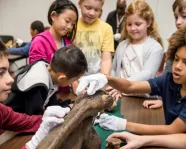
Use the Learn & Explore Gallery Trail to help students connect this lesson to their exploration of the galleries at ROM. Students are invited to visit the First Peoples Gallery and other parts of ROM as directed by Indigenous Museum Educators in the lesson to participate in hands-on activities and view touchable belongings.
| Delivery Language | This language is offered in English only. |
|---|---|
| Activities |
|
| Format | Theatre Lesson |
| Duration | 1 hour |
| Pricing | $16/person |
| Minimum Group | 15 |
| Maximum Group | 35 |
Learning Goals
- Learn that Indigenous Peoples have unique cultures, languages, and ways of knowing.
- Listen to and reflect on stories shared by Indigenous artists and educators.
- Show respect and curiosity when learning about Indigenous traditions and practices.
- Participate in Indigenous celebration and artistic expression.
- Recognize that Indigenous Peoples are part of vibrant communities across what is now called Canada.
- Participate in activities and experiences that celebrate Indigenous culture and resilience in joyful and respectful ways.
- Learn how Indigenous ways of knowing and doing connect to land, community, and everyday life.
- Engage respectfully with Indigenous artists and educators by listening actively and asking thoughtful questions.
- Recognize the diversity of Indigenous Nations across Turtle Island, including their unique languages, cultures, and traditions.
- Understand how Indigenous Peoples express identity and knowledge through storytelling, art, dance, and performance.
• Identify the diversity of Indigenous Nations, cultures, and communities across Turtle Island.
• Understand how Indigenous ways of knowing, being, and doing are expressed through art, performance, and storytelling.
• Reflect on the ongoing contributions and resilience of Indigenous Peoples, both historically and today.
• Make connections between Indigenous perspectives and their own roles in reconciliation, cultural awareness, and inclusivity.
- Identify the diversity of Indigenous Nations, cultures, and communities across Turtle Island.
- Understand how Indigenous ways of knowing, being, and doing are expressed through art, performance, and storytelling.
- Engage respectfully and thoughtfully with Indigenous artists, educators, and Artistic and Cultural Belongings through an activation
- Reflect on the ongoing contributions and resilience of Indigenous Peoples, both historically and today.
- Make connections between Indigenous perspectives and their own roles in reconciliation, cultural awareness, and inclusivity.
- Appreciate the complexity and richness of Indigenous cultural expressions, identities, and histories.
- Engage critically with Indigenous knowledge systems and understand their ongoing significance in contemporary contexts.
- Examine Indigenous perspectives through art, storytelling, and performance as valid and powerful sources of knowledge.
- Reflect on the role of settler colonialism and the importance of Indigenous self-determination, sovereignty, and cultural resurgence.
- Consider how they can support Indigenous-led movements and contribute meaningfully to reconciliation and solidarity.
Gallery Trail
Help your students connect this lesson to their exploration of the galleries at ROM.
Download this activity as:
Curriculum Connections
Kindergarten
- Play-based learning in a culture of Inquiry
- Belonging and Contributing
- Self-Regulation and Well-Being
- Demonstrating Literacy and Mathematics Behaviours
Social Studies
- Heritage and Identity: Our Changing Roles and Responsibilities
- People and Environments: The Local Community
Social Studies
- Heritage and Identity: Changing Family and Community Traditions
- People and Environments: Global Communities
Social Studies
- Heritage and Identity: Communities in Canada, 1780–1850
- People and Environments: Living and Working in Ontario
Social Studies
- Heritage and Identity: Early Societies to 1500 CE
- People and Environments: Political and Physical Regions of Canada
Social Studies
- Heritage and Identity: Interactions of Indigenous Peoples and Europeans prior to 1713, in What Would Eventually Become Canada
- People and Environments: The Role of Government and Responsible Citizenship
Social Studies
- Heritage and Identity: Communities in Canada, Past and Present
- People and Environments: Canada's Interactions with the Global Community
History
- New France and British North America, 1713–1800
- Canada, 1800–1850: Conflict and Challenges
History
- Creating Canada, 1850–1890
- Canada, 1890–1914: A Changing Society
English
- Literacy Connections and Applications – Digital Media Literacy; Application, Connections, and Contributions
- Comprehension: Understanding and Responding to Texts – Critical Thinking in Literacy.
First Nations, Métis, and Inuit Studies: Expressions of First Nations, Métis, and Inuit Cultures
- Artistic Expression and First Nations, Métis, and Inuit World Views
- Foundations
- Art and Society
English
- Oral Communication
- Media Studies
First Nations, Métis, and Inuit Studies: First Nations, Métis, and Inuit in Canada
- Historical Inquiry and Skill Development
- Prior to 1500
- 1500–1763: The Imposition of Colonialism – Contact, Conflict, and Treaties
- 1763–1876: Settler and State Expansion and Indigenous Resistance
- 1876–1969: Assimilation, Encroachment, and Life in the Industrial age
- 1969 to the Present: Resilience, Determination, and Reconciliation
Social Sciences and Humanities: Equity, Diversity, and Social Justice
- Foundations
- Equity, Social Justice, and Change
- Promoting Equity and Social Justice
English
- Oral Communication
- Media Studies
First Nations, Métis, and Inuit Studies: Contemporary First Nations, Métis, and Inuit Issues and Perspectives
- Political Inquiry and Skill Development
- Cultural Identity and Cultural Continuity
- Community Perspectives
- National and Regional Perspectives
- The Global Context
First Nations, Métis, and Inuit Studies: World Views and Aspirations of First Nations, Métis, and Inuit Communities in Canada
- Understanding and Respecting World Views and Cultural Diversity
- Colonization and Decolonization
- Reclamation and Reconciliation
Social Sciences and Humanities: Equity and Social Justice: From Theory to Practice
- Understanding Social Construction
- Addressing Equity and Social Justice Issues
- Personal and Social Action
English
- Oral Communication
- Media Studies
First Nations, Métis, and Inuit Studies: English: Understanding Contemporary First Nations, Métis, and Inuit Voices
- Oral Communication
- Media Studies
First Nations, Métis, and Inuit Studies: Contemporary Indigenous Issues and Perspectives in a Global Context
- Political Inquiry and Skill Development
- Indigenous Peoples and Perspectives
- Global Trends and Cultural Survival
- Legal, Political, and Social Action
First Nations, Métis, and Inuit Studies: First Nations, Métis, and Inuit Governance in Canada
- The Historical Context
- Support for and Challenges to Indigenous Rights
- Self-determination, Sovereignty, and Self-governance
Social Sciences and Humanities: Challenge and Change in Society
- Social Change
- Social Patterns and Trends
- Global Social Challenges
Highlights




Related activities