Lost Companions


Publié
Catégorie
Auteur
1
Riding swirling waves against fierce winds, the two figures centred in this remarkable painting are likely part of the Daoist Eight Immortals in Chinese folk legend. Their representation derives from a well-known myth in which the Eight Immortals, after attending a banquet of divine beings, decide not to return by boat. Instead, they cross a vast sea using their own supernatural powers, thereby showcasing their individual abilities and magical objects. Commonly referred to as “Eight Immortals Crossing the Sea (八仙過海)”, this display of divine power within the legend solidifies their importance in folk religion, explaining why they remain enduring figures of worship and intercession.
This painting is on display till June 21, 2026 at ROM’s Chinese art gallery and is titled Two Immortals Crossing the Sea. In this work, the upper figure is likely the immortal Lu Dongbin (呂洞賓), who is often depicted as a scholar, while the lower figure could be either Zhong Liquan (鍾離權), who is regarded as an early teacher and spreader of Daoist beliefs, or Lan Caihe (藍采和), an immortal known for the power to ward off evil and heal the sick through a ritual flower basket.
Paintings depicting the Eight Immortals were widely produced and sold by local workshops during the Ming (1368–1644) and Qing (1644–1912) dynasties. Beyond appreciating the fine artwork, people also believed that hanging such scrolls in their homes could protect the household and ward off harmful spirits. The legend of the Eight Immortals was also popular across other media at the time, including ceramics, lacquerware, and textiles. A blue and white porcelain jar and a Fahua ware jar, both on display in the Chinese gallery, illustrate this trend.

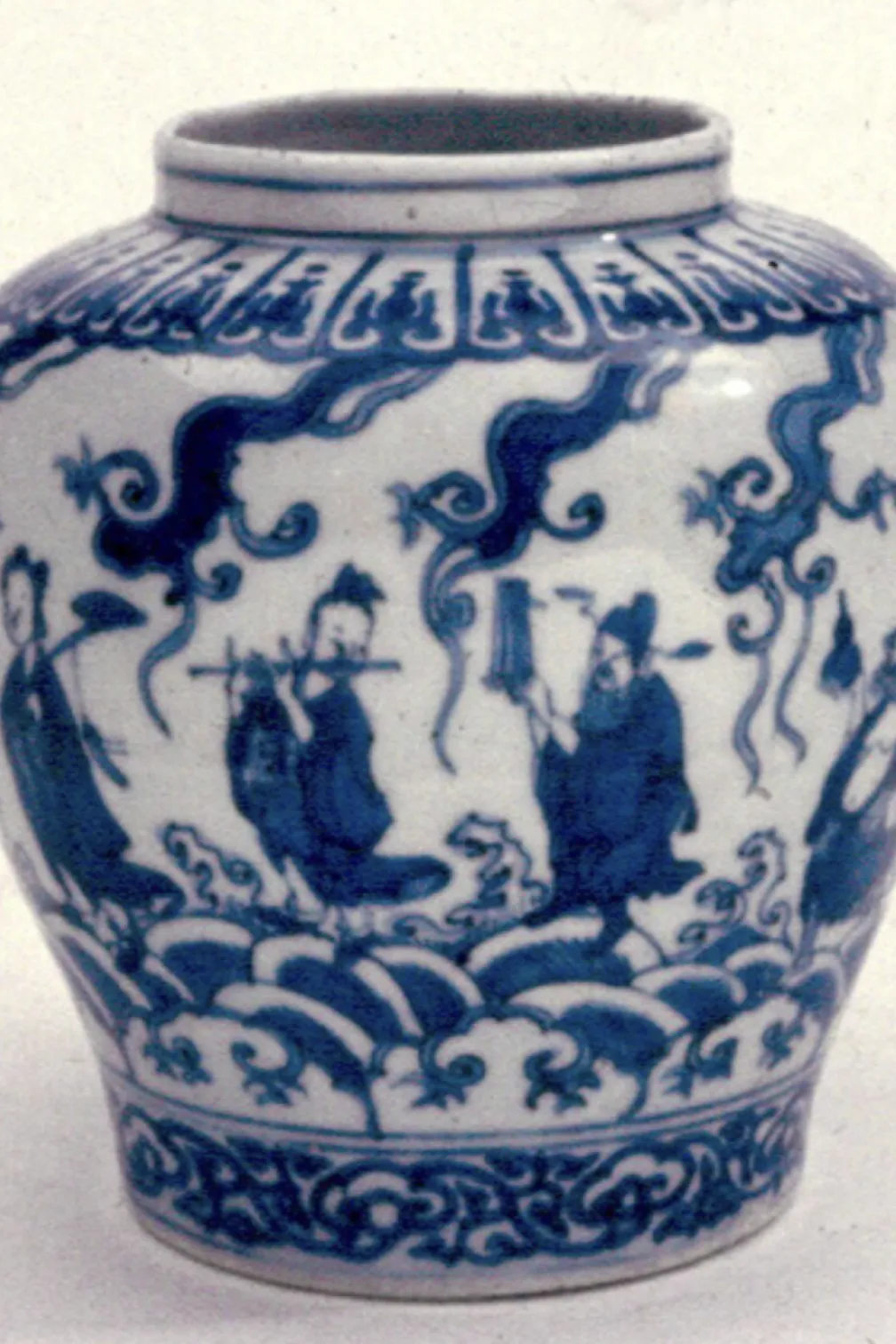

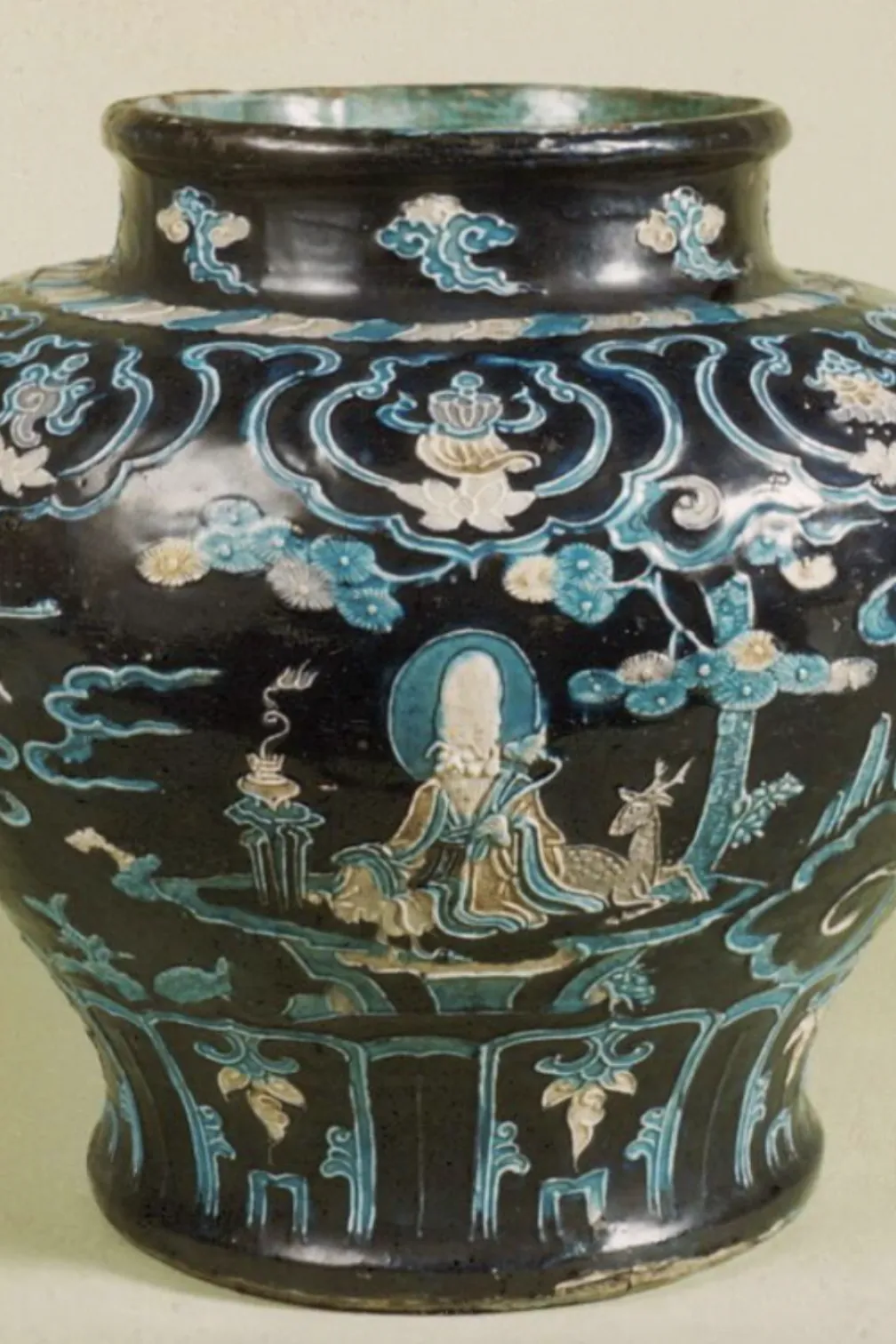
2
A notable feature of Two Immortals Crossing the Sea is that the figures fill almost the entire picture, and the strong wind blowing from left to right causes the visual focus to lean toward the right side of the composition. In the tradition of Chinese painting, compositions of this kind were usually meant to be shown together with other paintings, so that balance would be achieved through their placement alongside one another.
When paintings show two immortals in a single scene, they often follow one of two basic layouts. In one common format, here referred to as Type A (a mirrored left-and-right layout), the figures are arranged symmetrically on the left and right, facing inward toward the center. In another format, Type B (individualized scene pairings), the immortals are divided into two groups of four, each shown in a separate setting. Judging from the design of the painting on display, in which the figures nearly fill the entire surface, this work was likely part of a matching Type A ensemble and was originally displayed with three companion works to achieve a perfect visual balance.
Type A. Mirrored left-and-right layout. Facing inward toward the center

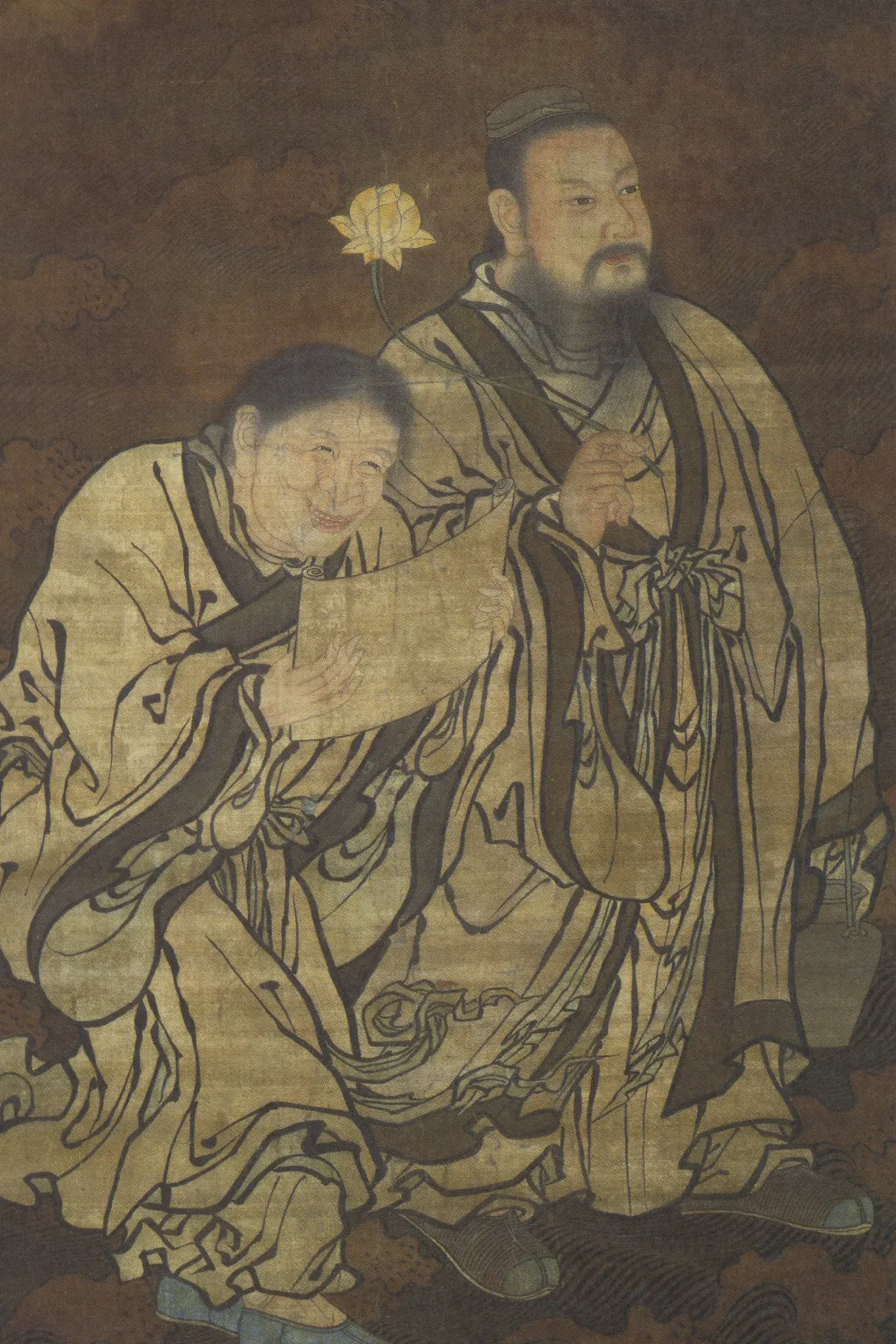

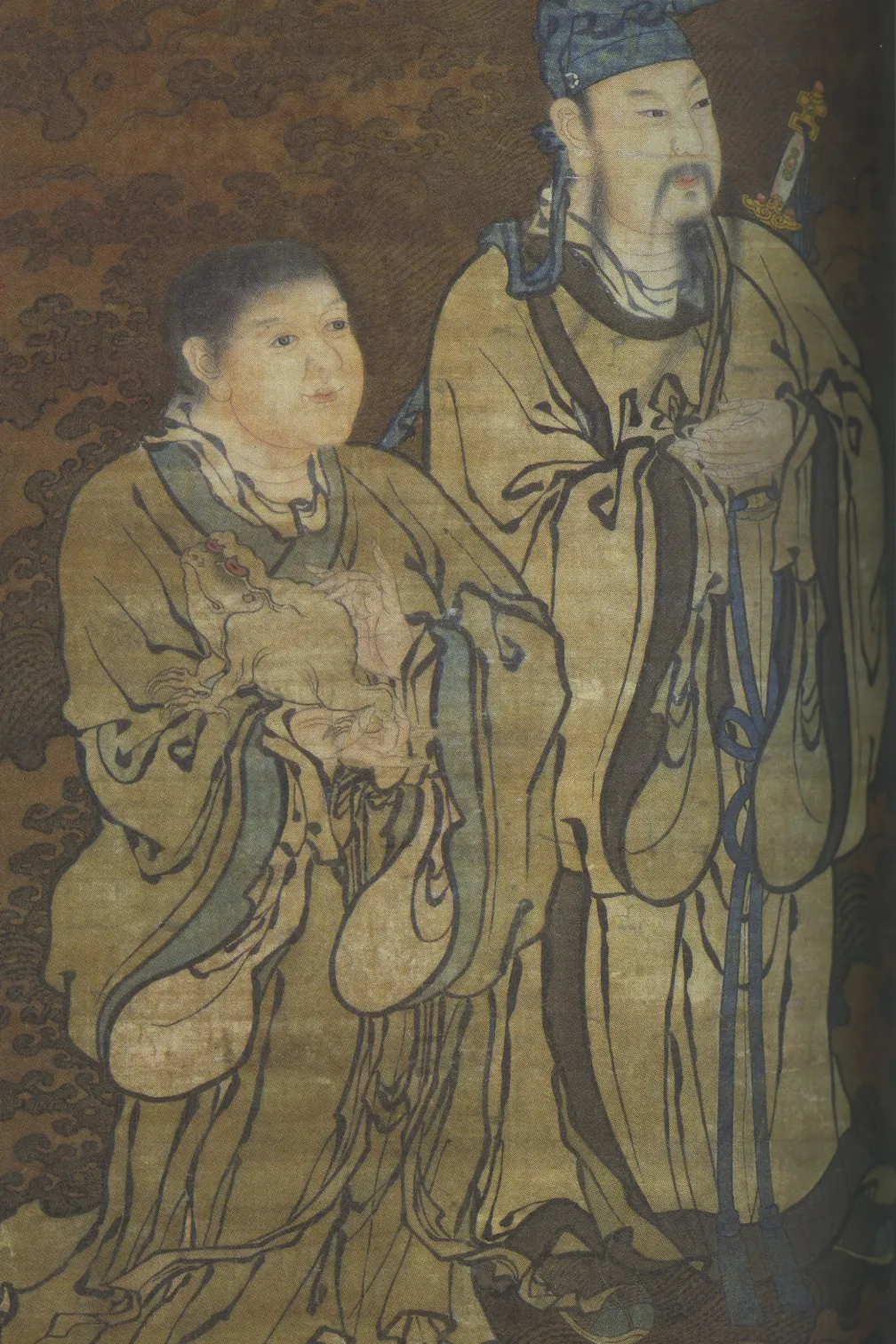

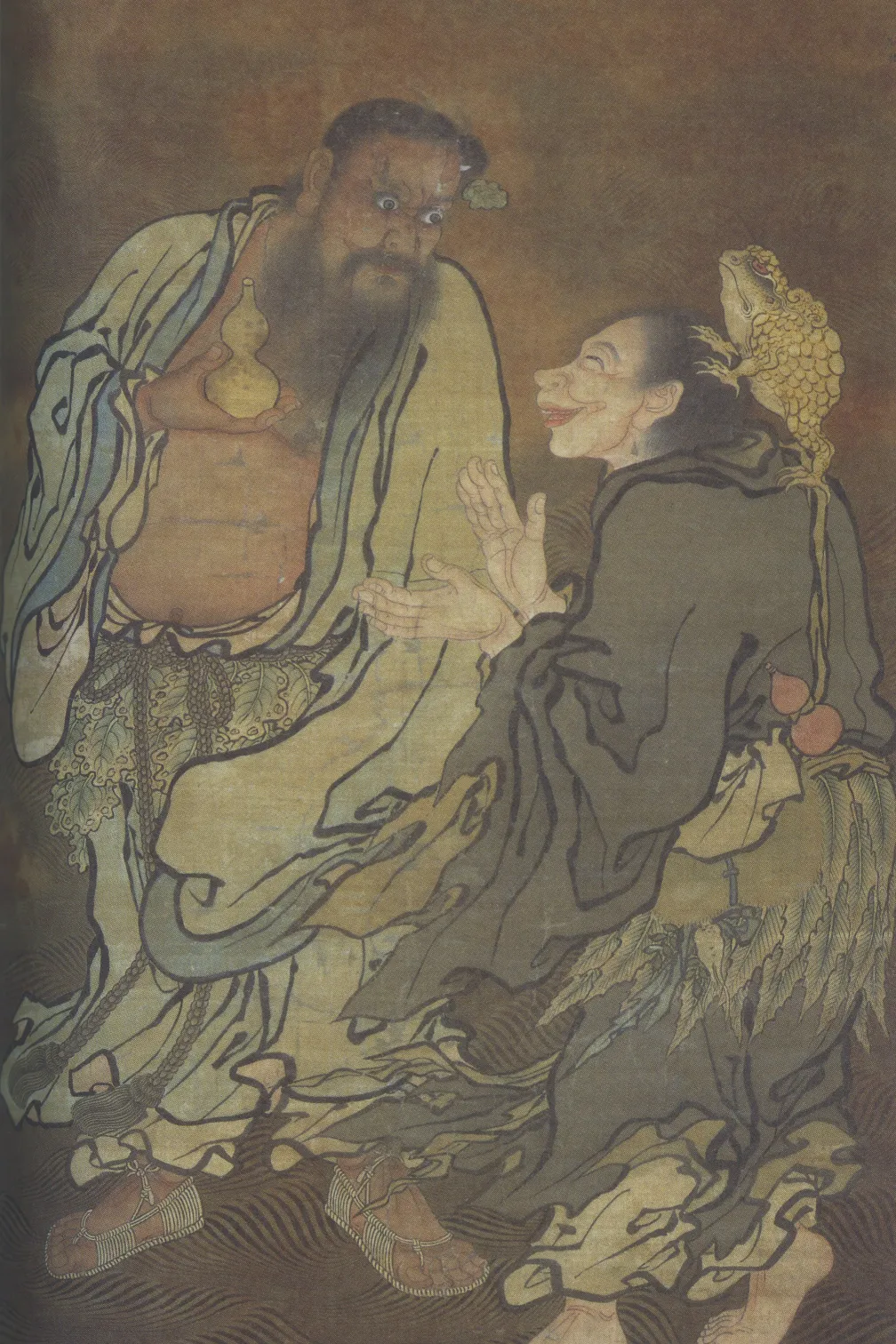

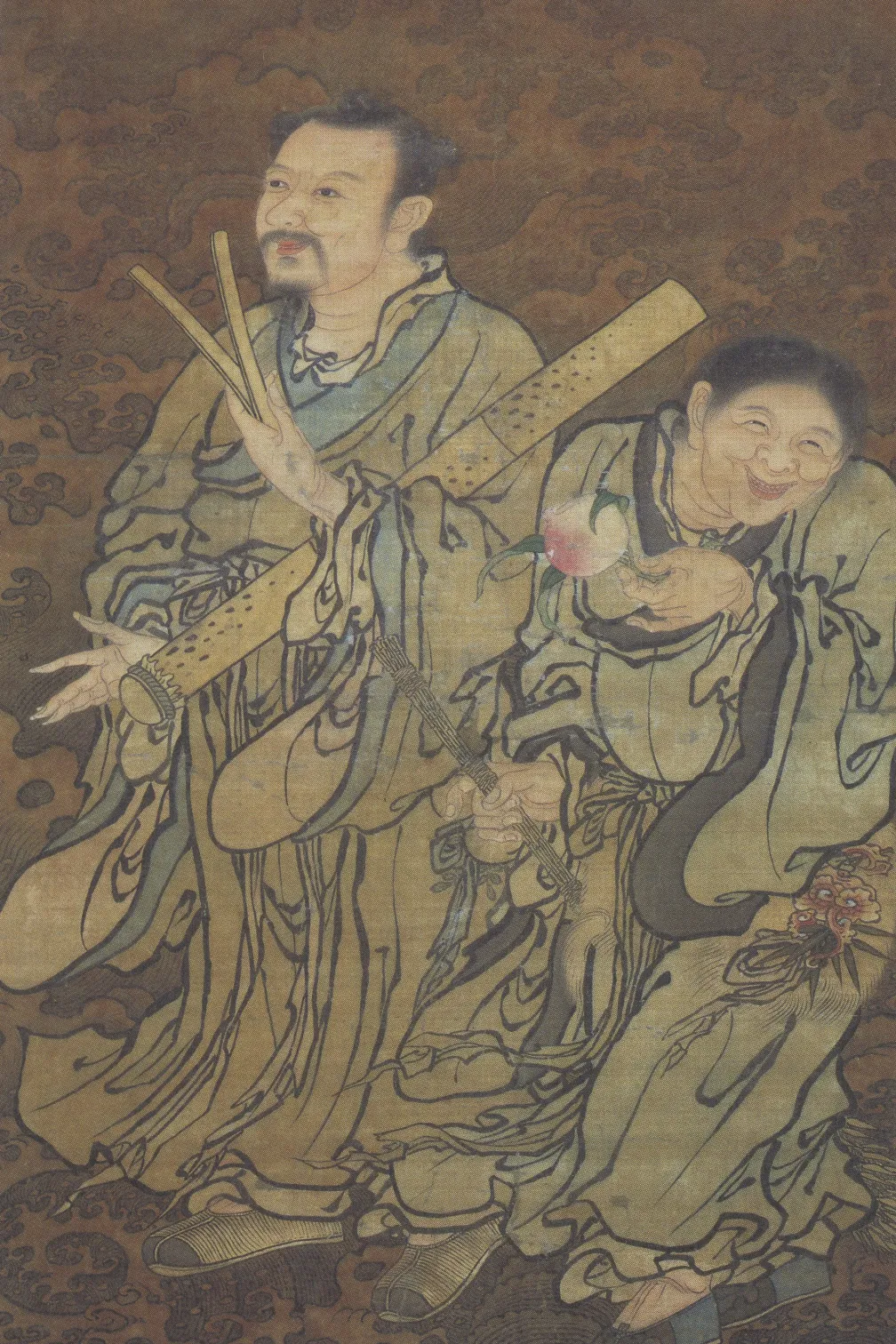
Type B. Individualized scene pairings. Paired in groups of two

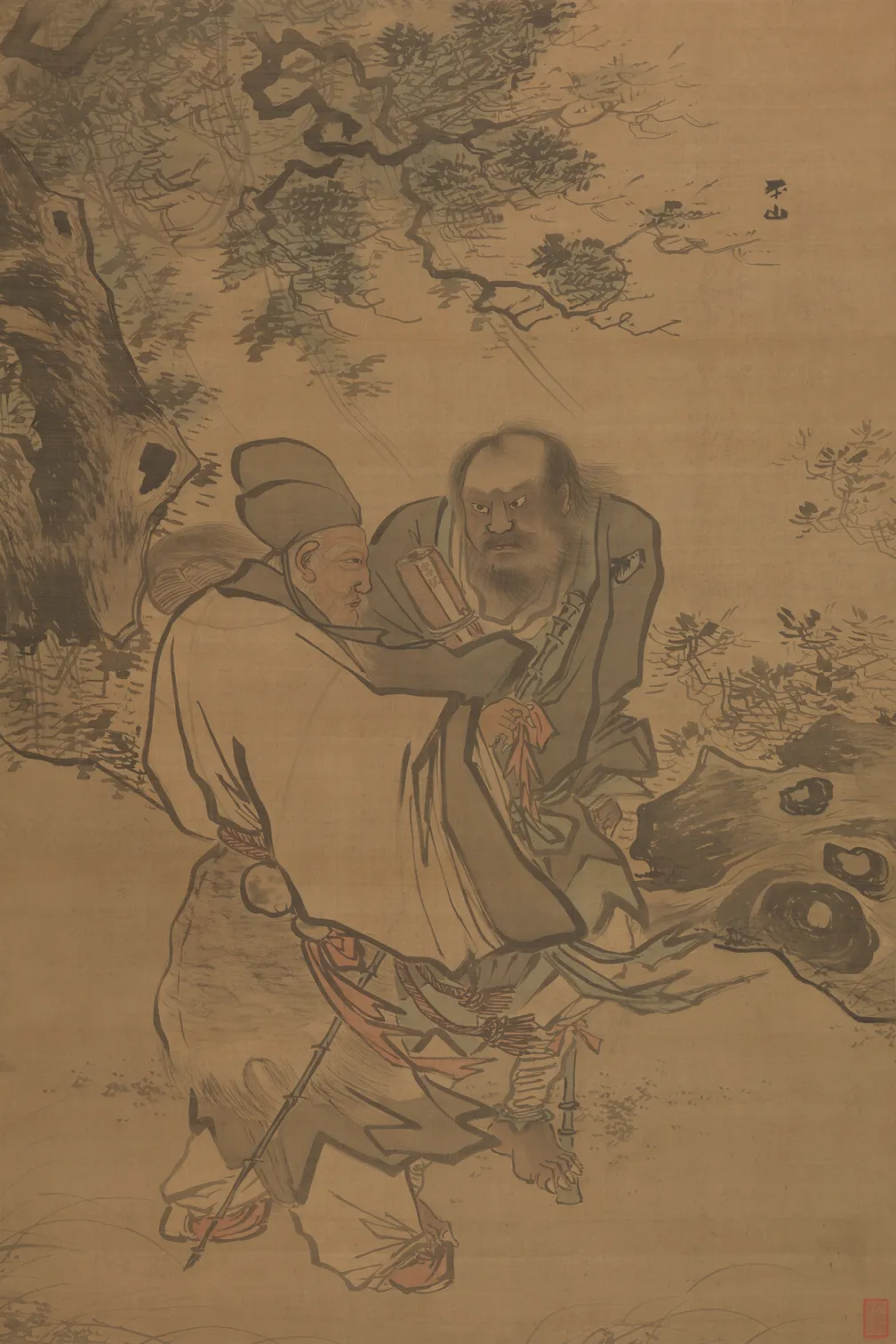

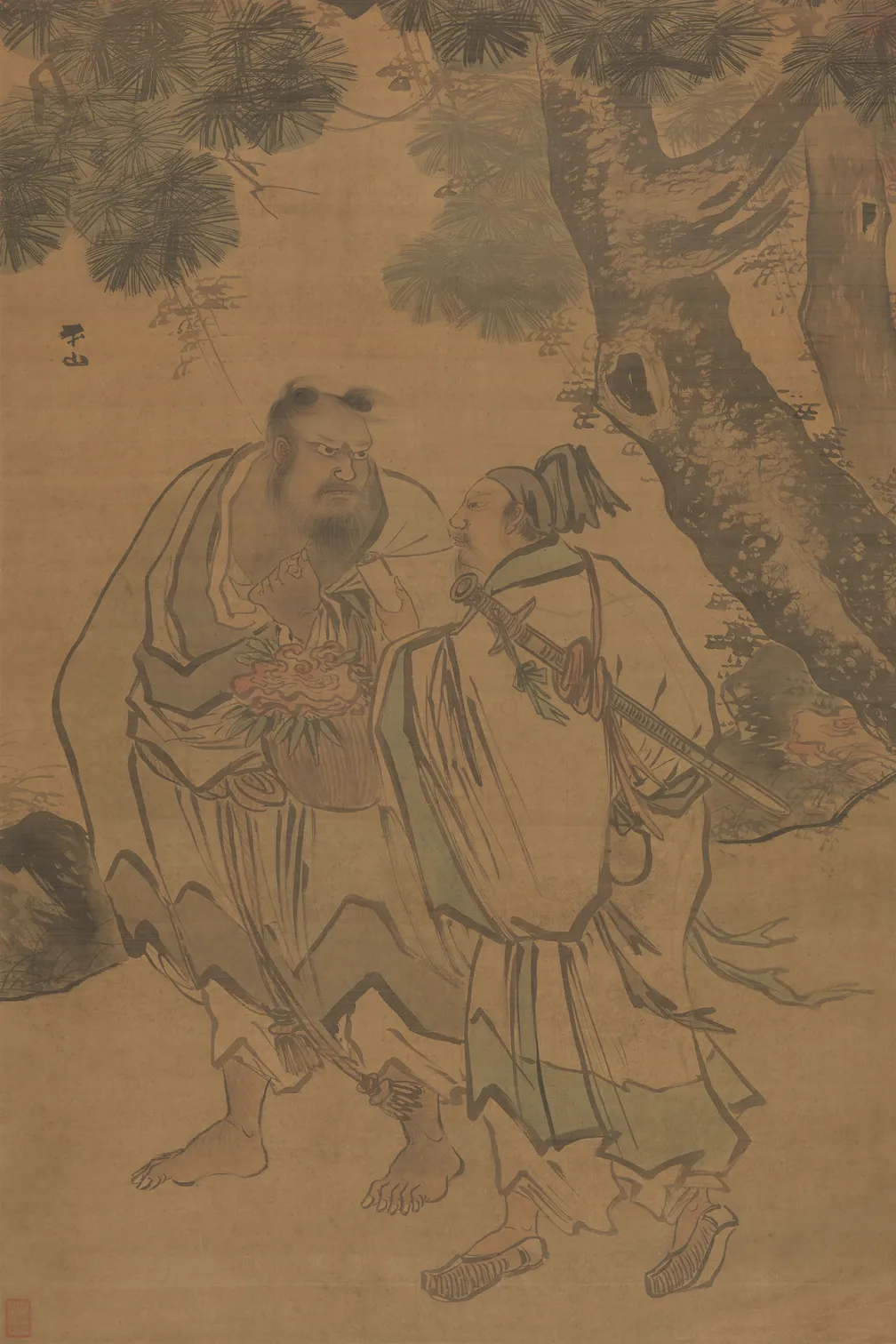

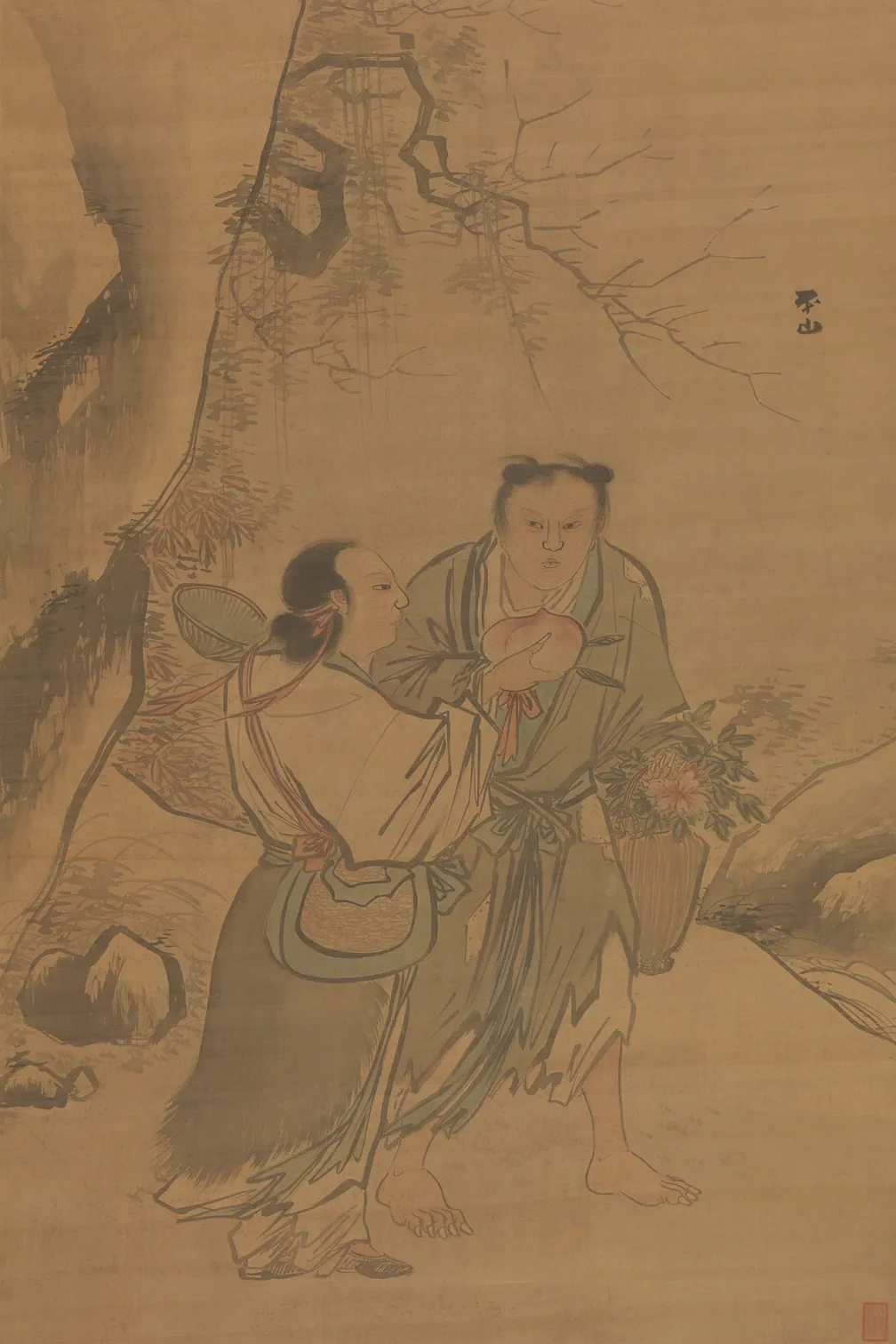

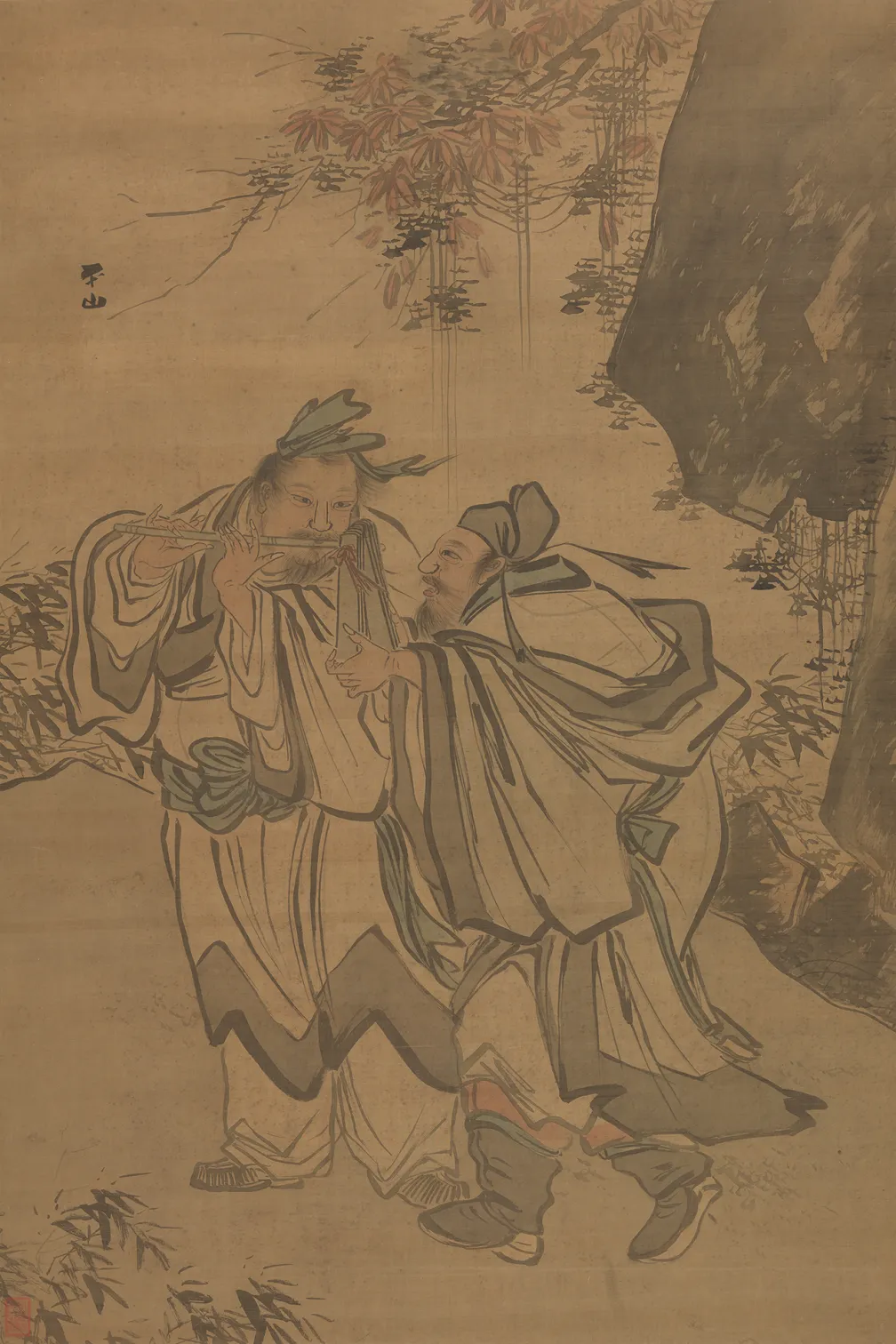
3
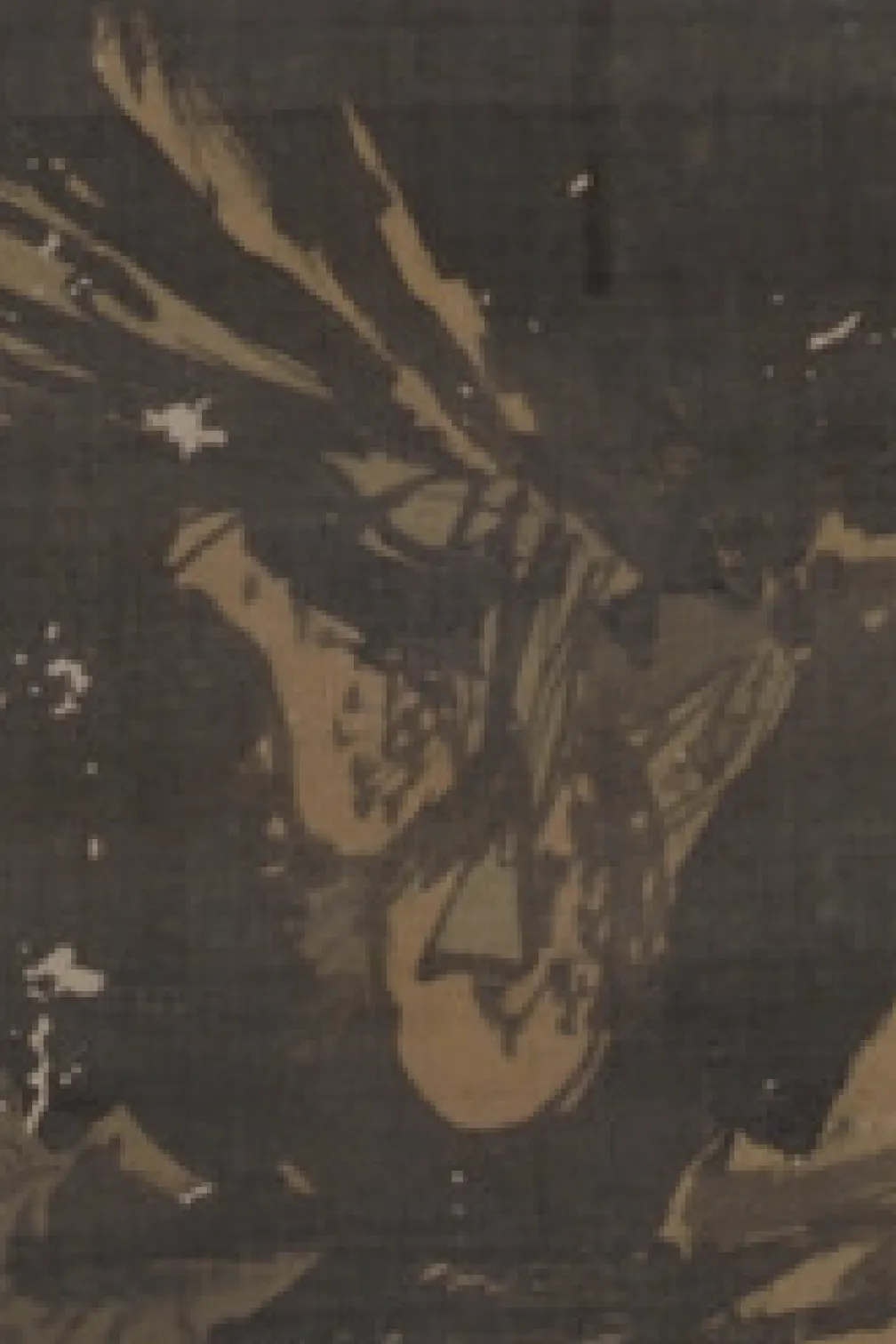
A closely related example can be found in the Palace Museum in Beijing, where one painting from a set of four hanging scrolls shows striking similarities to the painting at ROM. Details such as the windblown ribbons of the rear figure’s hat, as well as the hairstyle, collar, and gourd worn by the foreground figure, closely resemble those seen in the painting on display in ROM’s Chinese gallery. These shared features suggest that the artists involved worked on closely related preparatory designs or model drawings, instead of working in isolation. Taken together, the Palace Museum set further supports the idea that the ROM painting was originally part of a four-panel ensemble.

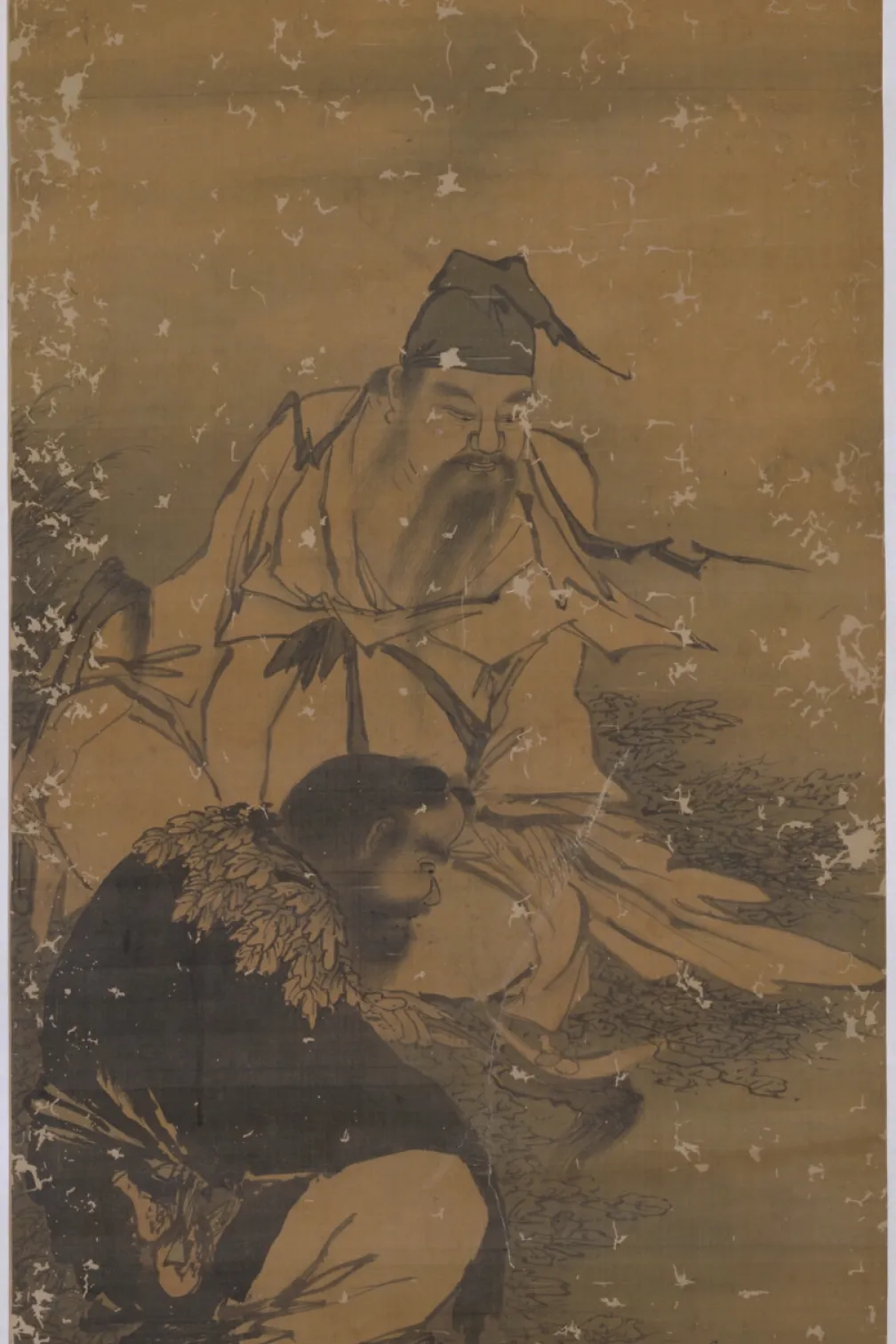


4
Remarkably, another work titled Two Immortals in the collection of the Palace Museum may offer an important clue in the search for the missing companions of the painting at ROM. In this Palace Museum work, the figures are arranged in proportions very close to the ROM painting, occupying nearly 90 percent of the pictorial surface. The two works also share close similarities in the facial features, including the rendering of the eyes, the choice of color for the lips, and the layered tones of the beard, with individual strands clearly defined. Strong angular linework, the movement of the trailing garments, and the depiction of surging waves and splashing water further reveal comparable approaches.
Despite minor differences in brushwork, the ROM painting and the Palace Museum work share a stronger visual relationship with each other than with other known paintings of the Eight Immortals. This close resemblance suggests that the two works were likely produced within closely related workshop traditions.
While the six other immortals linked to the ROM painting have not yet been found, this study supports the idea that the painting was originally part of a four-panel ensemble. Similarities among related works point to artists working within a closely connected visual tradition. As museum collections and private holdings around the world become more accessible, new evidence related to the making of Two Immortals Crossing the Sea, or even the rediscovery of its three missing companion paintings, may yet emerge. This possibility remains both promising and exciting.


5
This article was completed with the financial support of Taiwan’s Ministry of Education, and with the guidance and assistance of Dr. Wen-chien Cheng, Senior Curator, Louise Hawley Stone Chair of East Asian Art at ROM.
