Talks
Narratives: Re-evaluating Bengal’s Textile History through Embroidery

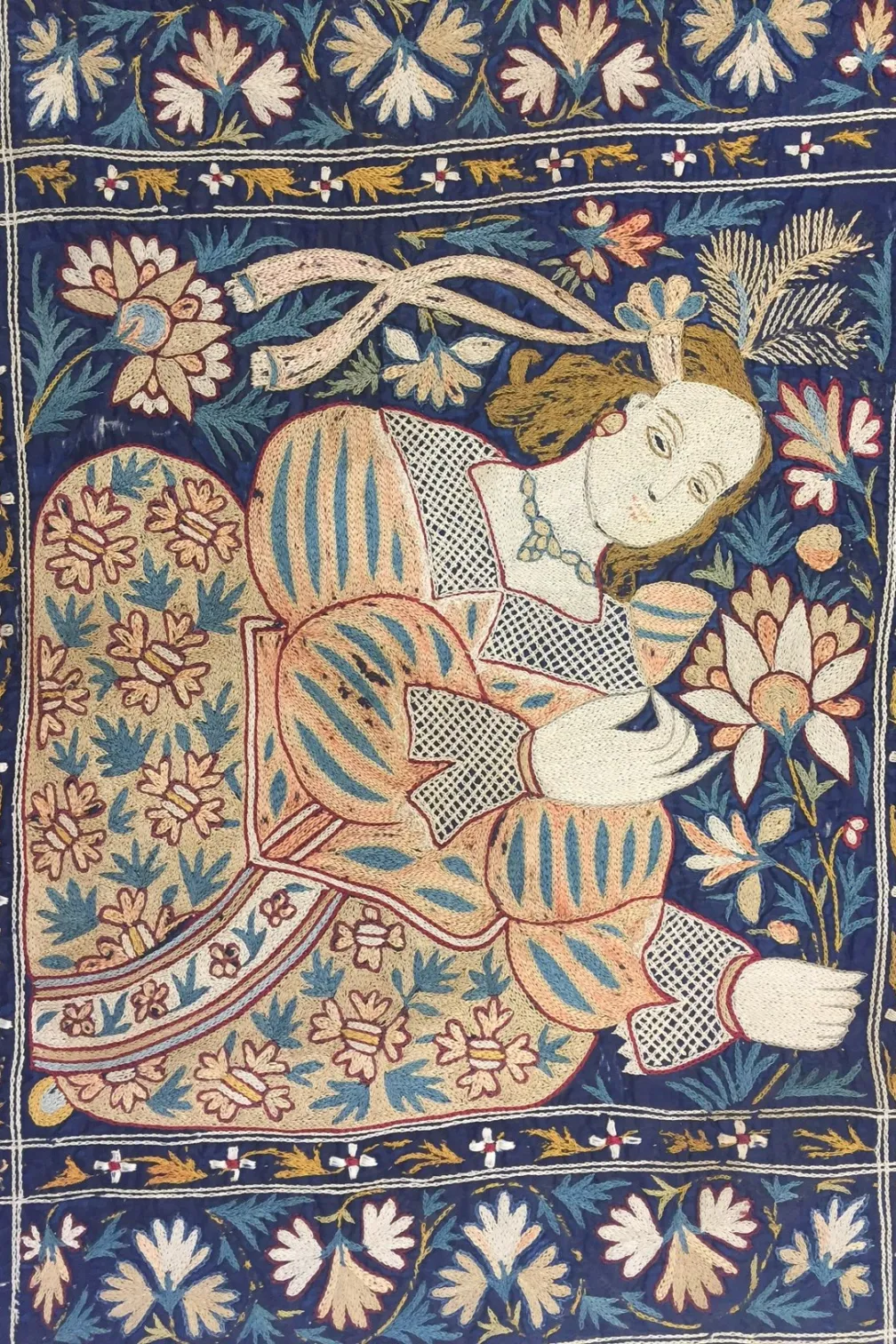
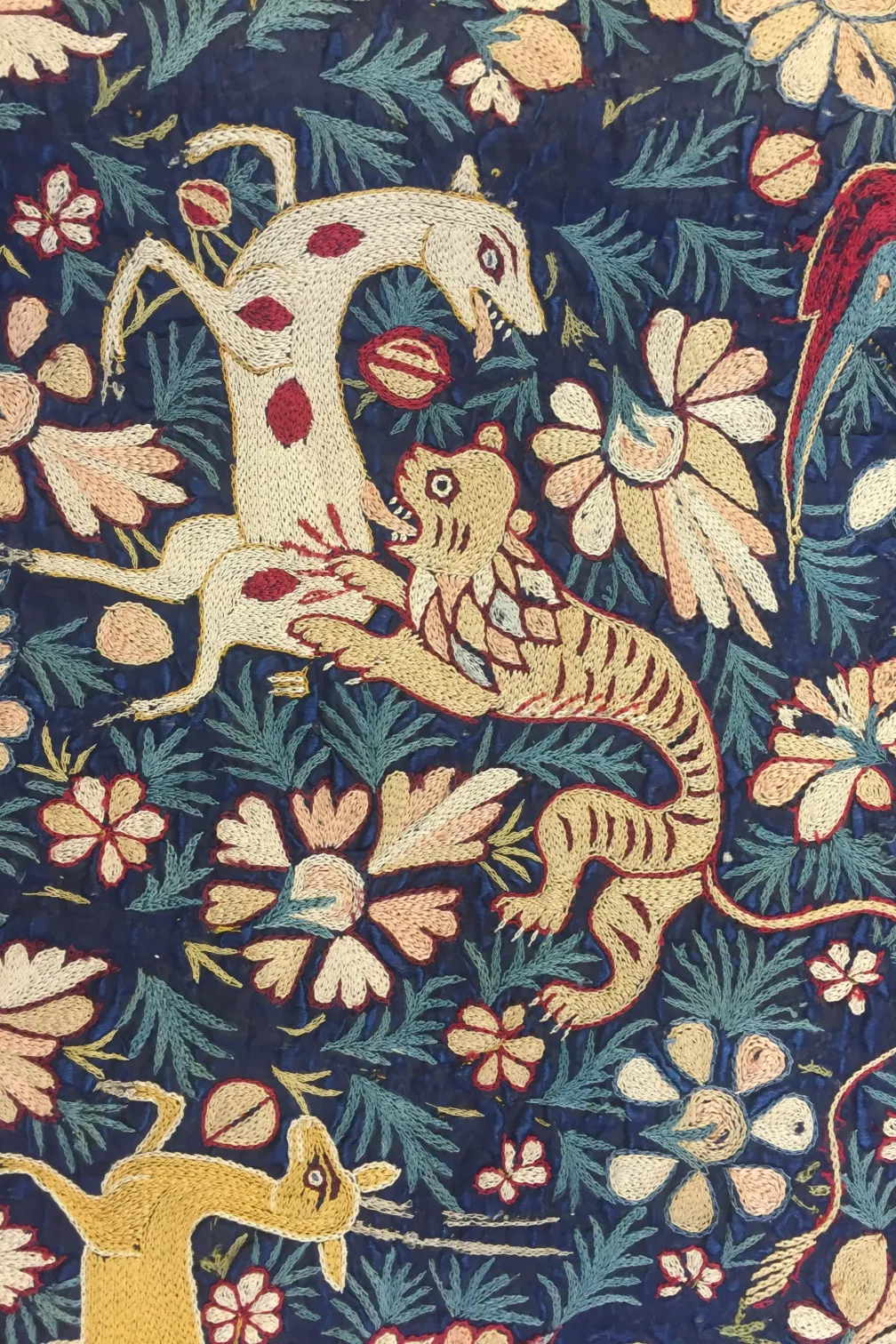
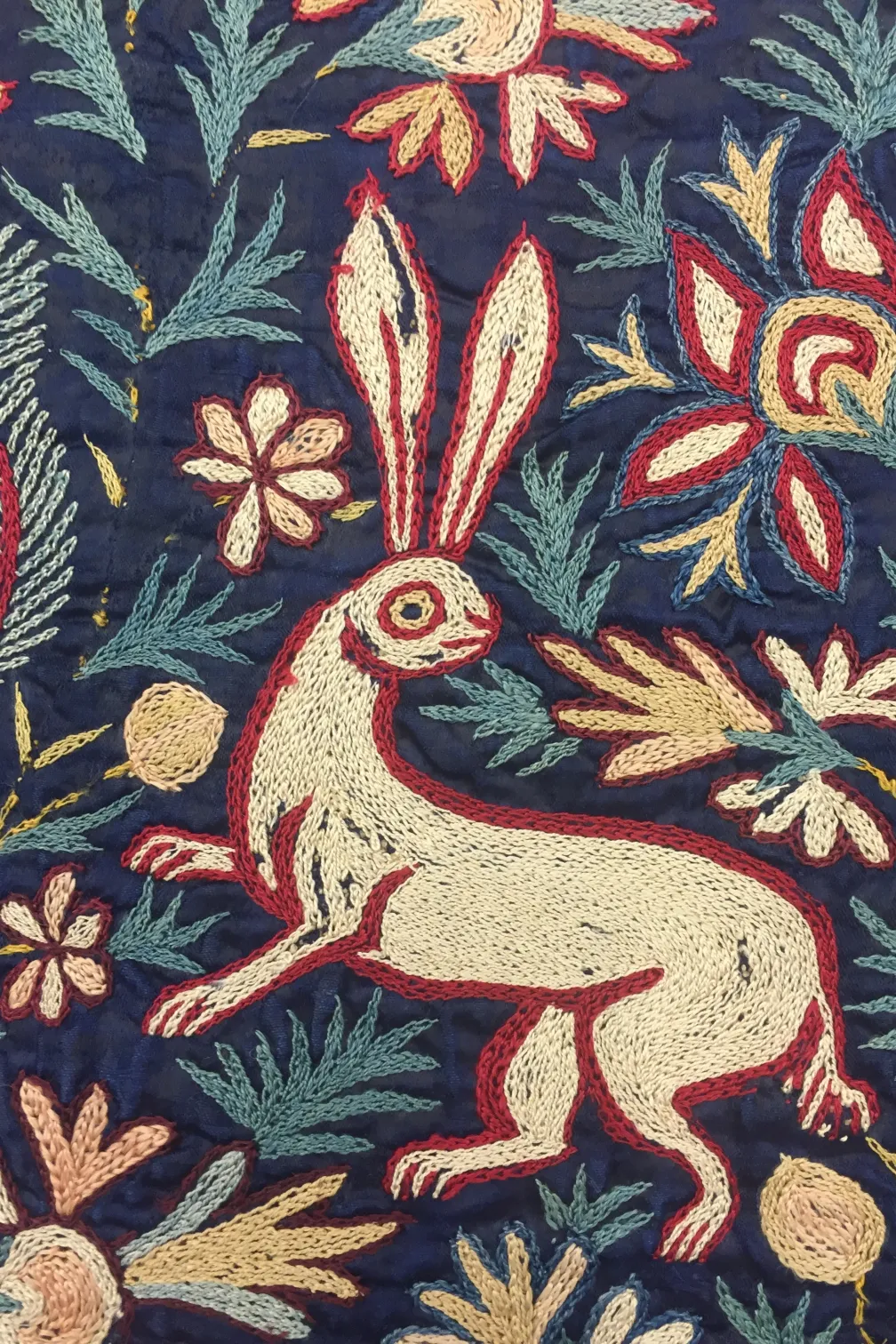
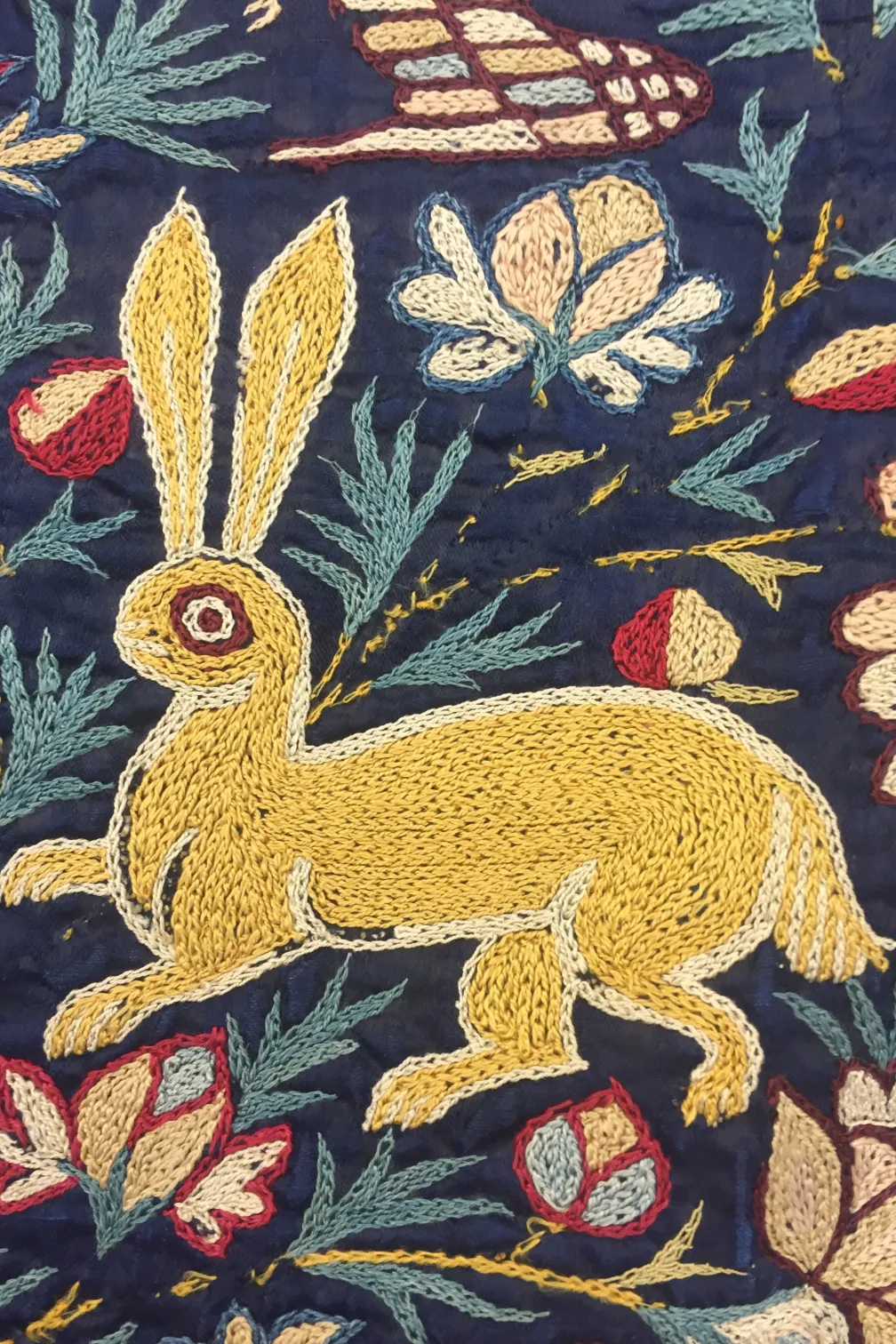
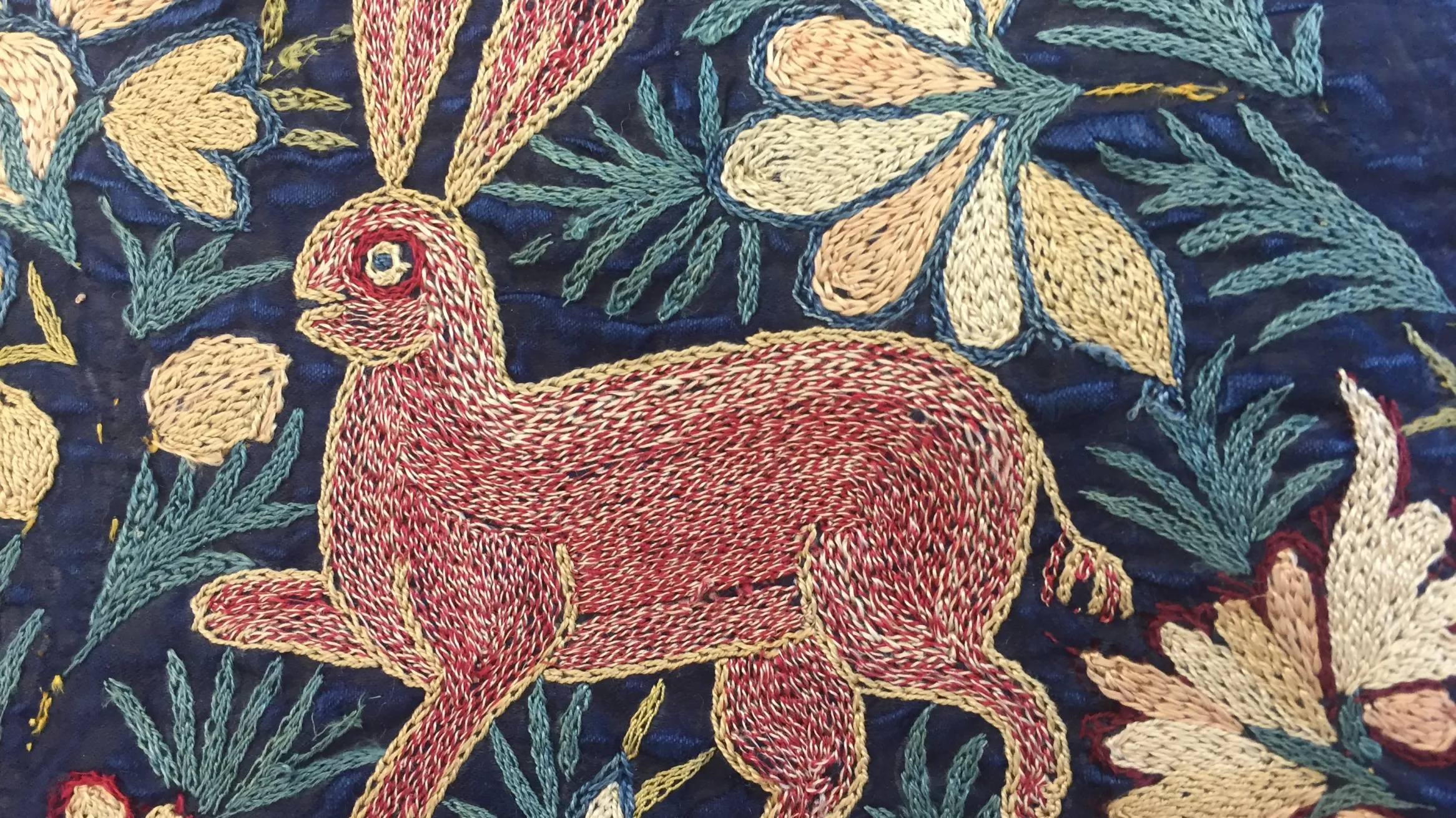
Detail, Colcha, Silk embroidery on silk cloth, Philadelphia Museum of Art Collection

Date

Friday, Jun 5, 2026 14:00 - 15:00

Location

Level B1,
Eaton Theatre

Admission

Free
Registration opens April 28, 2026.

Audience

Adults

About

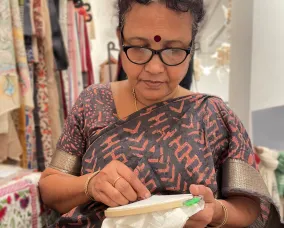
Kantha is a traditional textile practice from Bengal that uses basic running stitches on layers of old cloth to create quilts and decorative textiles. Today’s special program takes a closer look at the artistry and tradition of West Bengali and Bangladeshi embroidery. Learn about the significance of kantha and delve into the history of both the cloth and the lives of women who create it to this day. Our program features an in-gallery demonstration by master kantha embroiderer Bina Day, and a public talk by Dr. Pika Ghosh, Adjunct Associate Professor, Villanova University (Pennsylvania, USA). 

Dr. Ghosh will share recent research on colcha and kantha textiles, made respectively for Portuguese export and domestic use. What made one form suitable for export, while the other was seen as a “folk” tradition?  Dr. Ghosh's talk challenges long-held distinctions between the two types of textiles and uses these textile works and her findings as entry points into broader discussions of material culture. The talk will be followed by a moderated Q&A session led by Dr. Sarah Fee, Senior Curator, Global Fashion & Textiles at ROM. 

Speakers

Pika Ghosh, Adjunct Associate Professor, Villanova University (Pennsylvania, USA).
Dr. Pika Ghosh

Dr. Pika Ghosh teaches in the Art History Program at Villanova University (Pennsylvania, USA). Her research focus on the material culture of India and Bangladesh has ranged from early modern temple architecture and terra cotta sculpture to colonial-period repurposed textiles and embroidery, and painted paper handscrolls as a form of performance. Her first book, Temple to Love: Architecture and Devotion in Seventeenth-Century Bengal (Indiana University Press, 2005), which addressed the role of a distinctive regional architectural form in framing devotional practice, received the inaugural Edward C. Dimock Prize in the Humanities from the American Institute of Indian Studies. Subsequently, Making Kantha, Making Home (University of Washington Press, 2020), listened for the voices of female needleworkers at the intersections of domestic networks, memories, perceptions, sensorial resonance and emotional experience. This project builds on her work for the 2009-10 Philadelphia Museum of Art exhibition and catalog, Kantha, recipient of the College Art Association’s Alfred H. Barr Jr. Award for museum scholarship.   

Dr. Sarah Fee.
Sarah Fee

Dr. Sarah Fee joined ROM in April, 2009. She is responsible for the Museum’s renowned collection of ca. 15,000 textiles and fashion that come from greater Asia and Africa, as well as eastern Europe. Thematic interests include woven and printed textiles, textile trades, cross-cultural appropriations of cloth and dress, ceremonial exchange, spinning and dye technologies, and the history of museum textile collecting. Her research has been supported by grants from the Smithsonian Institution, The Wenner Gren Foundation, The Pasold Fund, and the Social Science and Research Council of Canada (SSHRC). Sarah’s recent exhibition projects include Cloth that Changed the World: India’s Painted and Printed Cottons, Born of the Indian Ocean: The Silks of Madagascar, and BIG. Before joining ROM, she guest-curated Gifts & Blessings, the Textile Arts of Madagascar (NMAfA, Smithsonian Institution) and co-founded the Tandroy Ethnographic Museum (Berenty, Madagascar). Dr. Fee is cross-appointed to the Art Department, University of Toronto. She is a Chercheuse Affiliée at the Musée du Quai Branly (Paris), a Research Associate at the Indian Ocean World Centre (McGill University), a Senior Fellow of Massey College, and currently serves on the editorial board of the Textile Museum Journal.  

Schedule

12:00 PM – 1:00 PM: In-gallery demonstration by Bina Dey (Location TBD) 

2:00 PM – 3:30 PM: Talk in Eaton Theatre 

About the Grant

The IARTS Textiles of India Grant supports a project on Indian textile arts. This biennial grant of $15,000 CAD can be used anywhere in the world by anyone in the world toward a project that enhances knowledge about Indian textiles, dress, or costume. Applicants can include scholars, curators, educators, community leaders, artists and citizen enthusiasts. Projects can be research-based or creative, and must further the preservation, documentation, understanding, encouragement, interpretation or revival of Indian textile arts. Through the support of such activities, the grant is meant to encourage cultural understanding, institutional collaboration and public engagement.