
About
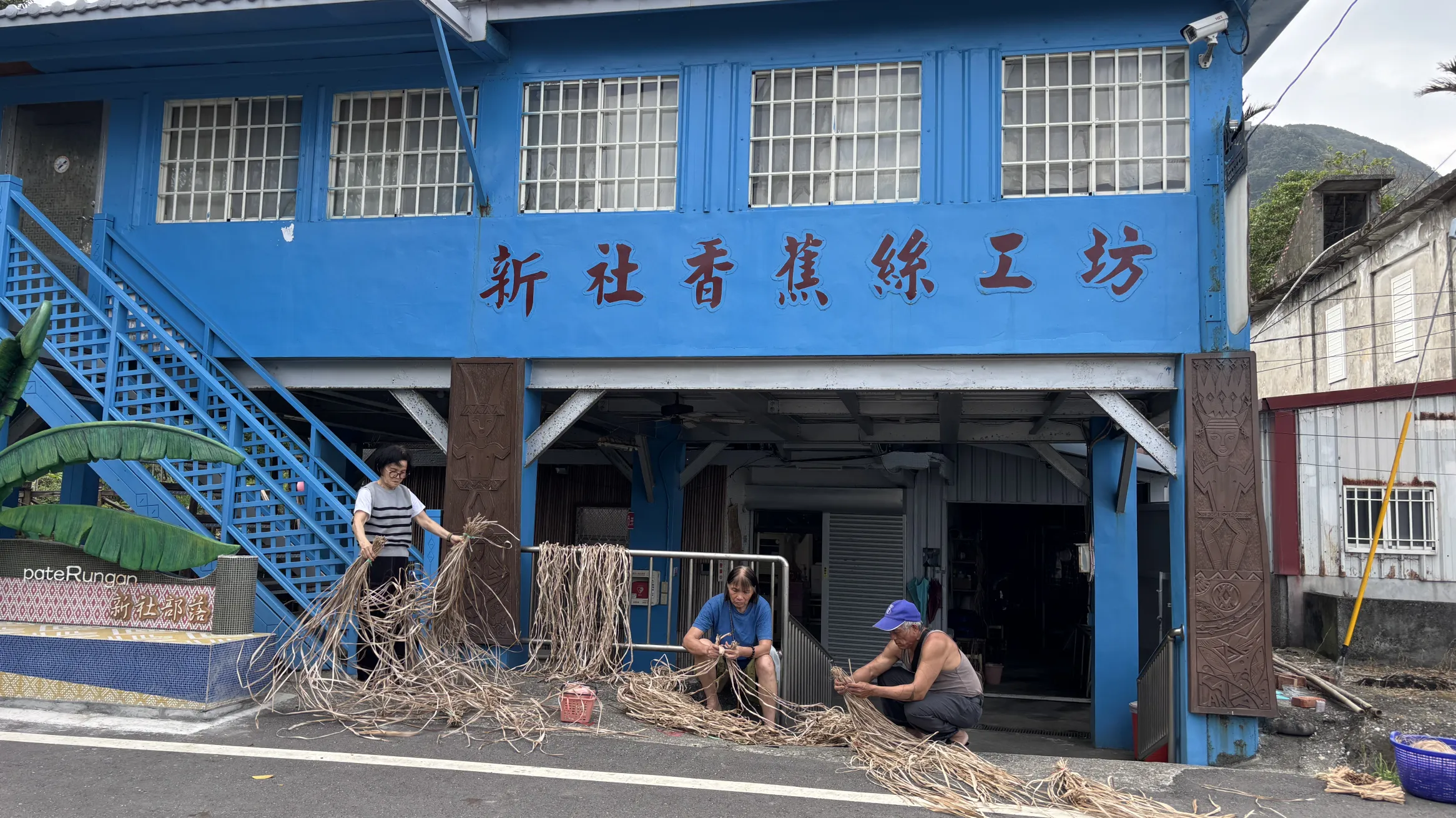
To learn how historic collections at ROM support contemporary Indigenous artists in Taiwan, we welcome members of the Xinshe Tribe (pateRungan) Banana Silk Weaving Group for a talk on the importance of community access to objects at the Museum.
We begin the program, led by Wen-chien Cheng and Sarah Fee, with an introduction to the collection of Indigenous textiles from Taiwan held at ROM, followed by a conversation with the visiting artists Lin Shuli 林淑麗, Pan Nianxin 潘念欣, and Xie Shuyue 偕淑月 about their project, and the two Indigenous filmmakers who are documenting their travels to Canada. We’ll learn more about why the Mackay Collection at ROM has been integral to their work in recovering the history and techniques of these specialized weaving traditions, and the importance these collection objects hold for the practitioners who are reviving traditional knowledge lost through decades of modernization and colonialization in Taiwan.
About the Project:
ROM stewards a rare collection of 19th century garments of the Kavalan Indigenous peoples of Taiwan, including a one-of-a-kind bridal ensemble. They were collected by, and gifted to, the Reverend George Leslie MacKay, who worked as a missionary and doctor in Taiwan from 1872. In generations prior to and after MacKay’s residence, Taiwan’s indigenous groups were violently severed from their cultural traditions by state resettlement and assimilation programs. Cultural identity, language, and craft were erased. From the 1990s, however, groups have worked to recover and reclaim these traditions. In 2005, members of the Xinshe tribe(pateRungan) in Fengbin Township, Hualien County formed the "LalaBan Xinshe Banana Silk Workshop" to recover the weaving of local banana-stem fibres. The group has successfully revived and reinvigorated these weaving traditions. Their current study of the Mackay Collection at ROM will guide future projects for future generations.
This event is presented by the Veronika Gervers Research Fellowship. The Research Fellowship is supported by a memorial fund established in 1979 to commemorate the noted ROM curator and textile scholar, Veronika Gervers, and to promote scholarly research that incorporates the textile and costume collections at ROM.

These events are offered in English only.