Crafted Legacies



- Published
- Category
-
Culture
*
"Every Saturday I watched as colourfully dressed groups of village women passed by, and this has remained a vivid image in my memory since those distant days. That rainbow of colours climbing the hill each Saturday morning stimulated my consciousness and appreciation of traditional Palestinian dress.” (Widad Kawar, Threads of Identity, 2011, p. 11.)
For over 70 years, Widad Kamel Kawar (neé Irani, b. 1931) has made it her life’s work to collect and document Arab women’s dress and examples of domestic arts. Born in Tulkarem, Palestine, she grew up in Bethlehem and Ramallah and later studied Arab history and sociology at the Beirut College for Women (now the Lebanese American University). During the 1940s, she would visit her mother’s village, Aboud, in the Ramallah area, and she remembers how the women, old and young, would put on their best clothes and get together and embroider every day after lunch. She learned so much from them and began to appreciate the nature of Palestinian village life, acquiring her first embroidered dresses (thobes) from a relative. This was the start of the Widad Kawar collection.
She met and married Kamel Kawar from Jordan and settled in Amman in the 1950s, where she began collecting examples of dress and objects of daily life from Palestine, as well as Jordan and Syria. Later, she expanded her collecting to the wider Arab world and opened a small private museum on the grounds of her family home in Amman in 2014. Over many decades, Kawar has become internationally recognized as one of the most renowned private collectors and textile historians of Arab dress, having lectured and published widely and generously loaning her collections for prestigious exhibitions and publications around the world.


“This collection is such a vital part of my mother’s story and where she came from. As a Palestinian, she married into a Jordanian family across the river and sometimes felt like part of her culture was disappearing, so she started her collection in order to preserve that history and connection.” —Amin Kawar
*
Now aged 95, Kawar and her closest family members wanted to share her lifelong legacy with a wider global audience, an ambition that would be well served by preserving and presenting a portion of her collection at ROM, Canada’s largest museum.
Her son, Amin, who lives in nearby Oakville, Ontario, explains, “The idea of finding a satellite home for this collection has been our family’s goal for a long time. As a regular visitor to ROM, I always noticed how multi-faceted it was—global in scale and scope—and it felt like just the right place to house a capsule collection of my mother’s legacy, which is a vital part of her story and where she came from. As a Palestinian, she married into a Jordanian family across the river and sometimes felt like part of her culture was disappearing, so she started her collection in order to preserve that history and connection.”
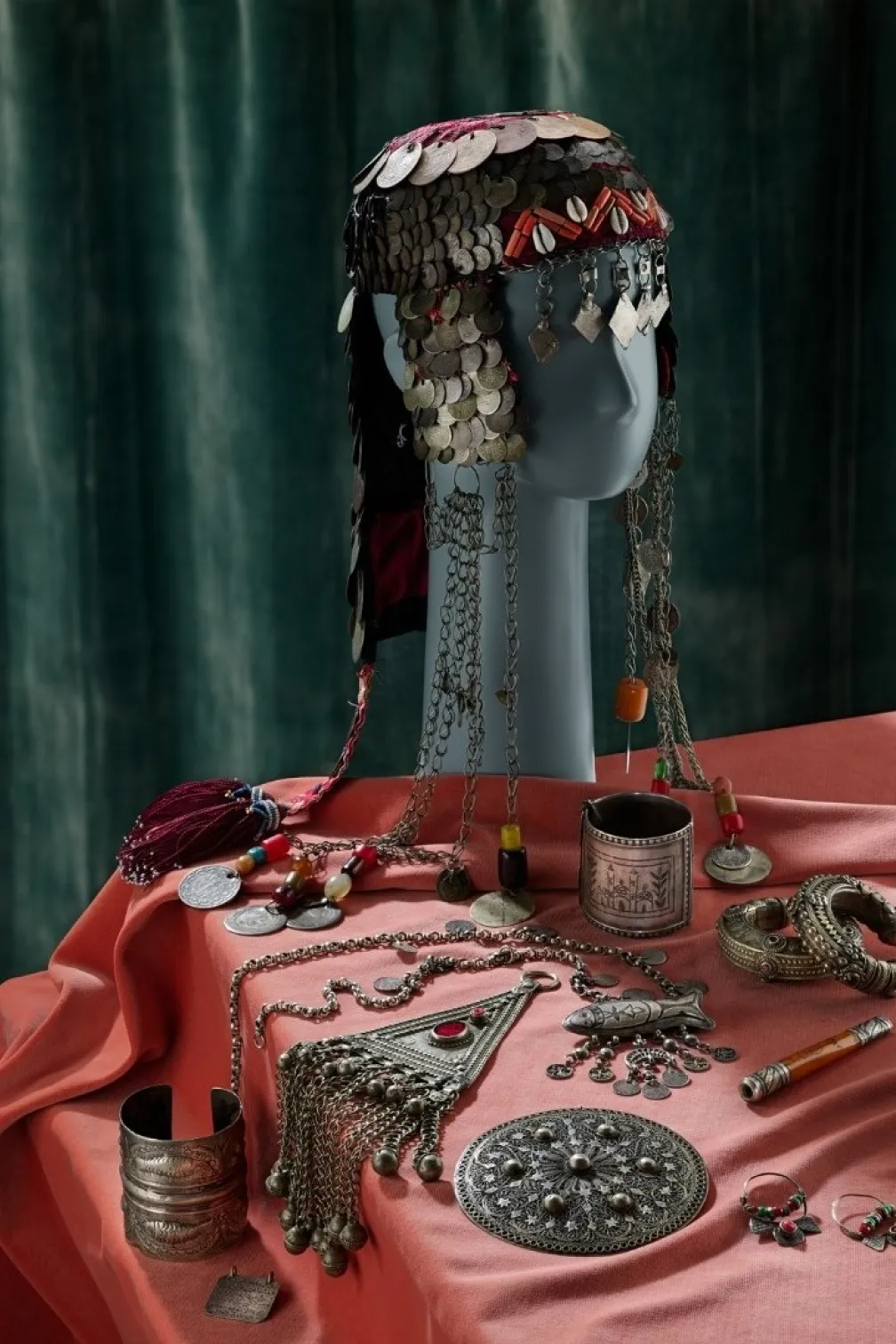
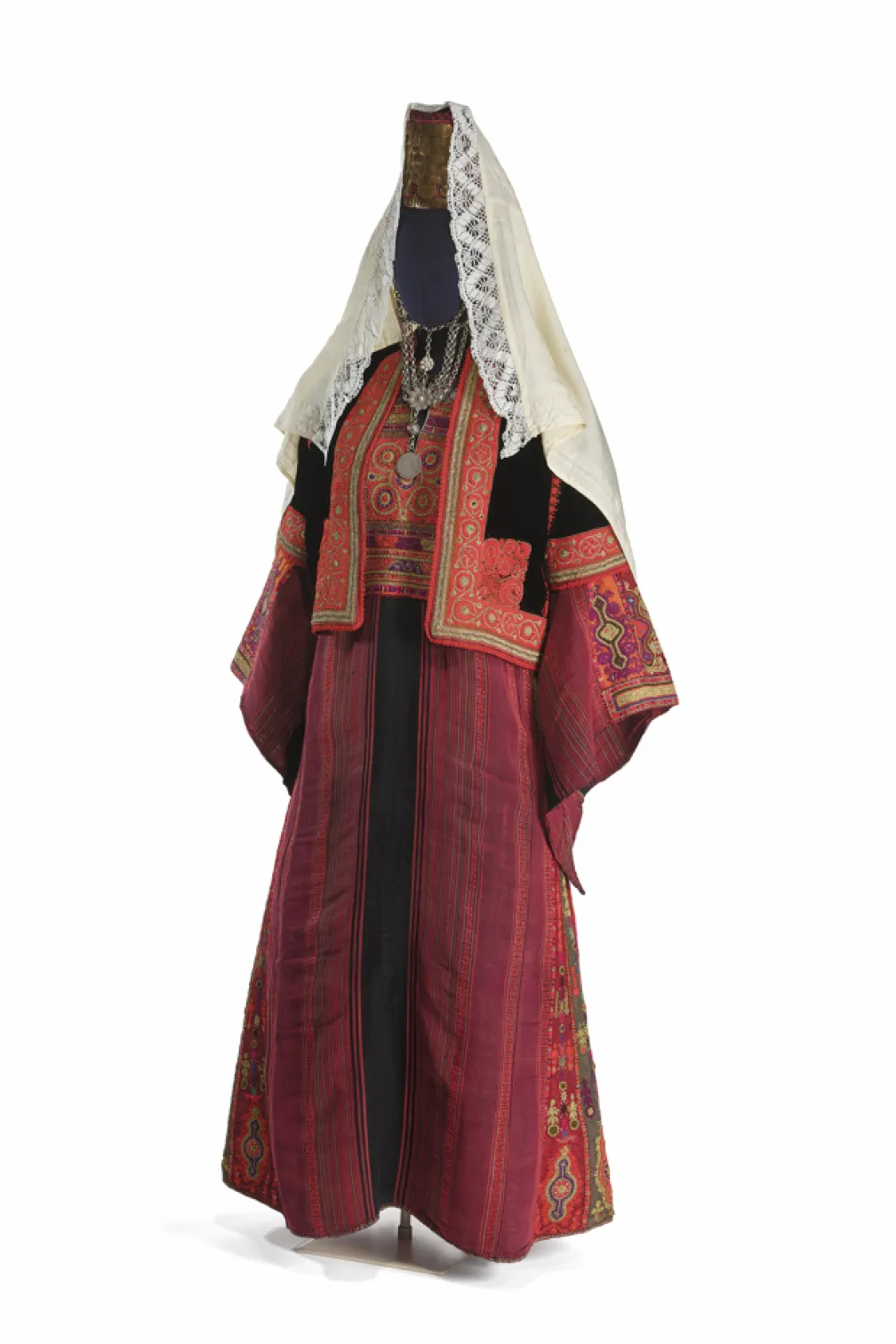
Between 2019 and 2022, my fellow ROM curator Dr. Sarah Fee and I worked with Kawar (affectionately known as Auntie Widad) over three separate visits to Jordan. We sat and keenly listened each day to her, as we recorded information and rare anecdotes in the workspace of her museum, the Tiraz Centre: Widad Kawar Home for Arab Dress. She led the process of carefully selecting women’s headdress es and jewellery, hand-embroidered dresses and shawls, shoes, baskets, and kitchen implements from her private collection for ROM’s capsule collection of 20th-century textiles and objects of daily life from across the Arab world.
Her decision to partner with ROM was not by chance. Kawar had visited ROM in the mid-1980s to examine Palestinian dresses that dated to the 1850s in the Museum’s collection. These items had been acquired by ROM’s first Director, Charles T. Currelly (d. 1957), from the estate of his late friend the English Pre-Raphaelite painter William Holman Hunt (d. 1910).
“At that time, I witnessed how wonderfully the dresses were carefully stored, conserved, and exhibited,” Kawar says. “I am confident that ROM will take care of the items selected from my collection in the same way and share them widely with their audiences. Canada is home to people from across the Arab world, and I hope that communities will find joy and inspiration in their own cultural heritage at ROM.”
One of the most multicultural cities in the world, Toronto is now a second permanent home for a representative slice of her vast collection.
From among the several thousand textiles and objects in her personal collection, we created ROM’s Widad Kawar Collection of Arab Dress and Heritage Arts. This transformative acquisition of 586 objects and textiles has elevated the Museum to a position of global renown in 20th-century Middle Eastern dress and associated heritage arts, creating the finest and largest public collection of its kind in North America.
The majority of the collection spans the Levant region—primarily Jordan, Palestine, and Syria—but also includes unique items from Egypt, Iraq, Lebanon, Libya, Morocco, Oman, Saudi Arabia, Sudan, the U.A.E., and Yemen. Divided between two curatorial sections at ROM—Islamic World, and Global Fashion and Textiles—the collection comprises 362 textiles (articles of dress, accessories, textile samples, cushions, and rugs) and 224 objects (jewellery, headdresses with coins, beaded objects, basketry, metalwork, and woodwork).

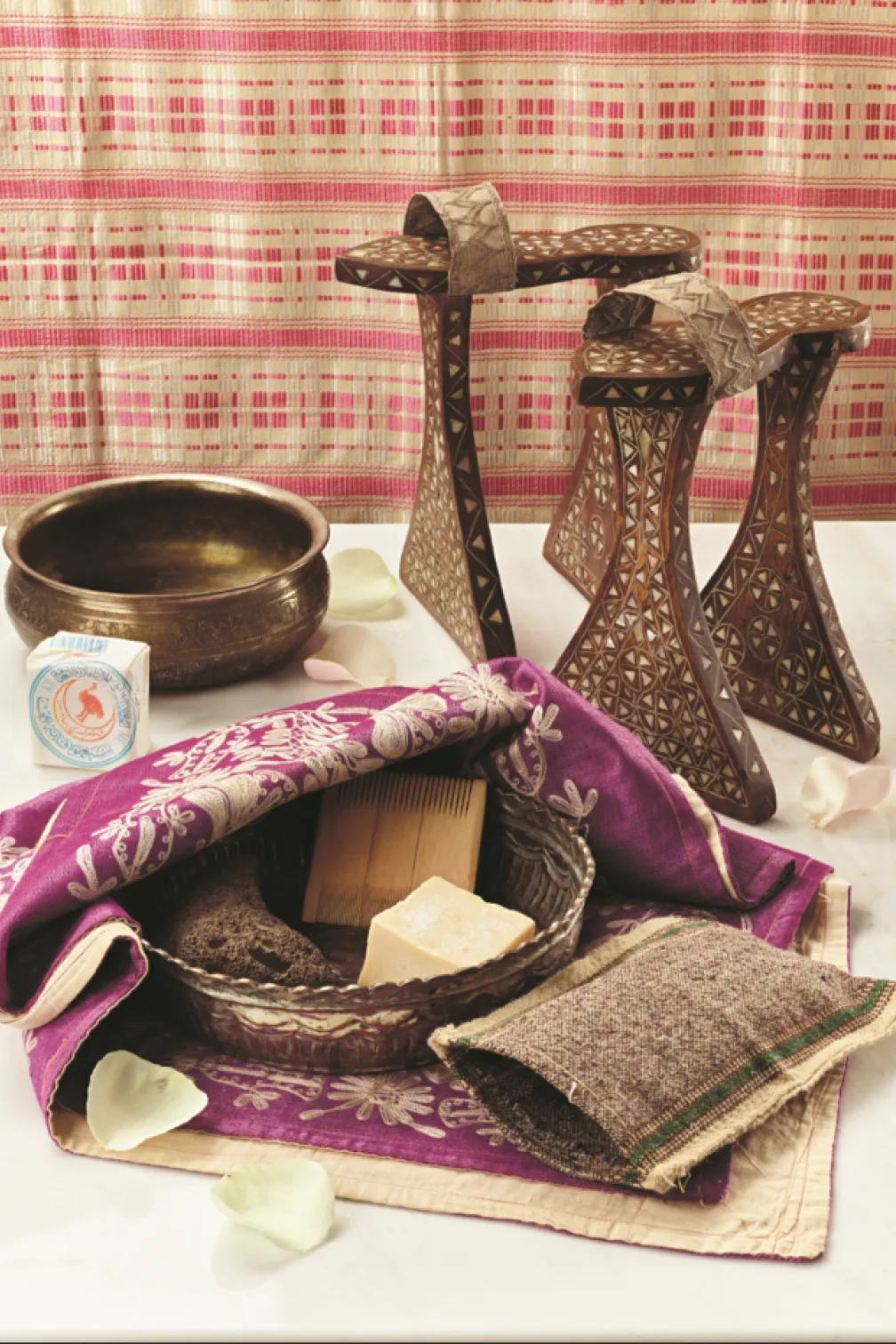

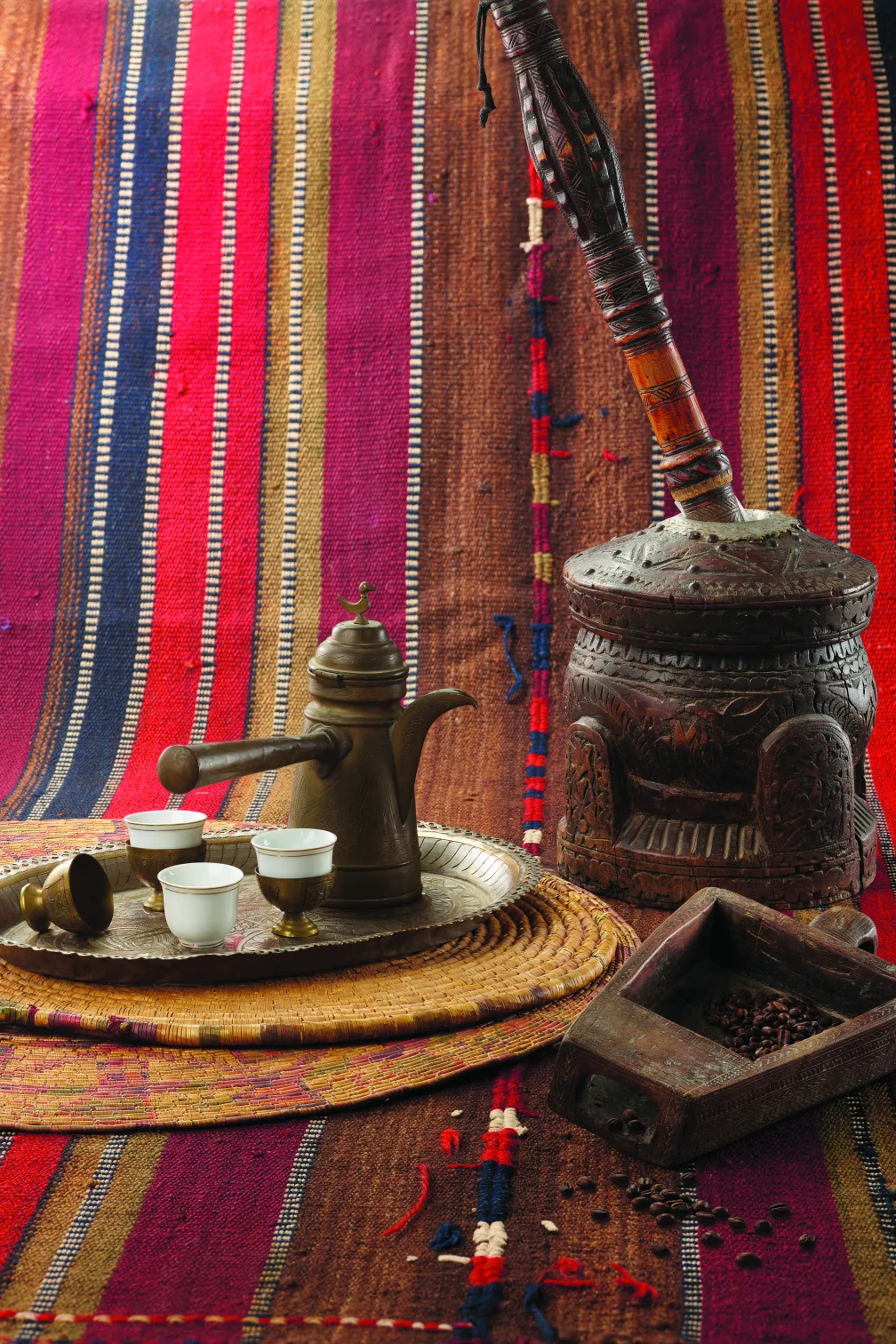
Each stitch, each hammered mark embodies the intergenerational exchange of knowledge and engenders a sense of belonging. In the wake of crises, displacement, or oppression, the continuity and celebration of craft practices provide stability, document history, and reclaim unheard voices
*
Her Excellency Sabah Al Rafie, Ambassador of the Hashemite Kingdom of Jordan to Canada, who made a point of visiting ROM twice to preview the Kawar Collection, sees the Museum’s acquisition of this capsule collection as part of the lived heritage of thousands of Canadians who trace their roots to the Arab world. As she notes, the collection is “a carefully documented archive of voices, values, stories, and histories stitched into form and painstakingly preserved through generations.”
The Ambassador’s perspective is echoed by the Honourable Mohammad Al Zaibak, a Canadian Senator based in Toronto. “The Arab Canadian community has a long history in this country dating back more than 140 years. At a time of misunderstanding and conflicts around the world, having a respected institution like ROM share a collection like this with the public—and engage in community collaboration and consultation in the process—ensures that diverse communities feel represented and invested in the Museum,” he says.
Plans are underway for a future expansive ROM-original exhibition highlighting the Kawar Collection, which will also incorporate modern-day Arab fashions and contemporary art.
Visitors eager for a glimpse of the sheer beauty of the collection can view the magnificent bridal ensemble from Bethlehem on the Museum’s ground-floor Samuel Hall Currelly Gallery—an installation which will be on display until the end of the year. (Due to their sensitivity to light, textiles and objects made from organic substances cannot remain on display indefinitely—particularly in order to preserve the Kawar Collection for generations to come.) Thanks to ROM’s extensive online database, audiences around the world will soon get a chance to explore the collection’s exceptional items for themselves.
The Kawar Collection serves as a profound living archive that bridges past and present. The handmade objects and hand-embroidered textiles from across the Arab world anchor community identity through shared traditions and preserve collective memory by holding intangible stories and histories. Each stitch, each hammered or incised mark embodies the intergenerational exchange of knowledge, a conversation between people and their environment, and engenders a sense of belonging. In the wake of crises, displacement, or oppression, the continuity and celebration of craft practices provide stability, document history, and reclaim unheard voices.
As Amin Kawar eloquently puts it, “When a young person enters ROM and is able to see something from their own culture or heritage, it has a huge impact. Having the Kawar Collection at the Museum will help connect Arab visitors of all ages with a piece of their own history and inspire dialogue more broadly.”
*
The Widad Kawar Collection of Arab Dress and Heritage Arts is generously supported by the Louise Hawley Stone Charitable Trust and a partial gift from Amin Kawar and the Estate of Kamel Kawar.
Fahmida Suleman is Senior Curator, Islamic World at ROM.
