ROM Ideas: Oh Canada! Research, Innovation and Collecting for Our Shared Future


Category
Audience
Age
Subjects
About
How do ROM curators, collection care professionals, students, and other Museum professionals lead their fields in local scientific research, care for cultural belongings, and collaborate with thought leaders and experts to preserve Canadian contributions and narratives for future generations? In this dynamic half-day of short talks, ROM staff will share how Museum workers connect with local communities and resources that matter to Canadians to help shape a better understanding of a uniquely Canadian past, present, and future.
Talk
Korean Canadian artist Jin-me Yoon, recipient of the 2025 Governor General’s Award in Visual and Media Arts, has been a vital presence in the Canadian art scene since the early 1990s.
Her artworks challenge us to consider how Canadian identity has been shaped by travel photography, museums, and the legacy of the Group of Seven. How do these, often white colonial settler, notions of identity stand up in the face of Canada’s more diverse realities? What role can artists and museums play in sparking this kind of discourse across differences in heritage and lived experiences?
Her artworks address shared concerns of human and nonhuman living on this planet and invite us to reconsider how to create the possibilities for peaceful co-existence, embracing differences among diverse communities and generating positive discourse that uplifts, especially, younger generations.
This short talk explores ROM’s role in introducing Yoon’s work to diverse audiences, including Korean diasporic communities, LGBTQ2+ audiences, students, visitors, and academic researchers, and the potential for institutions like ROM to hold space for the complex conversations that inevitably arise.
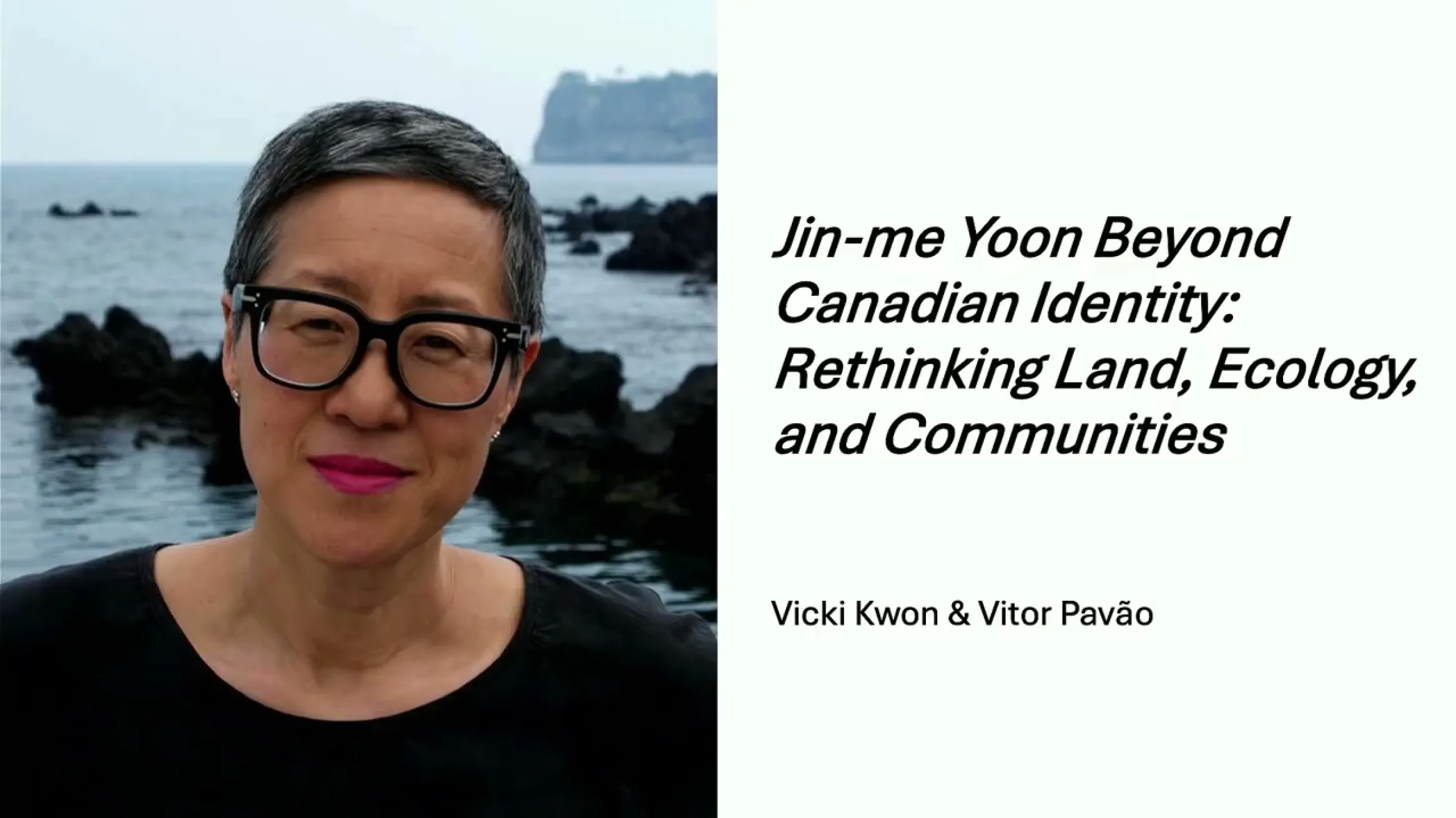
Jin-me Yoon Beyond Canadian Identity: Rethinking Land, Ecology, and Communities
Talk
Museum collections do not happen by accident. They are assembled by people whose choices are unavoidably influenced by what they value. Digging through archives and tracing the history of collecting is an exercise called “critical provenance research.” Archives invite us to consider the people and ideological forces that brought ancient objects from disparate places to Canada. This new research invites us to reflect on what these objects mean, how museum workers’ perspectives on them have changed over the years, and how we should care for them moving forward.
Thanks to roughly 50 newly recovered letters written in the years before ROM first opened its doors, we are now learning new things about some of the deeply religious ideas that shaped part of the Museum’s earliest collections of antiquities: the Walter Massey Collection. Written by a young C. T. Currelly, these letters detail his travels around the Mediterrannean, which were funded by donors from the Massey family and other community members. In these letters, Currelly described with vibrant detail how the objects he purchased would bring the world of the Bible to life. Reading these letters brings new perspectives to how we view and understand Canada’s largest museum.
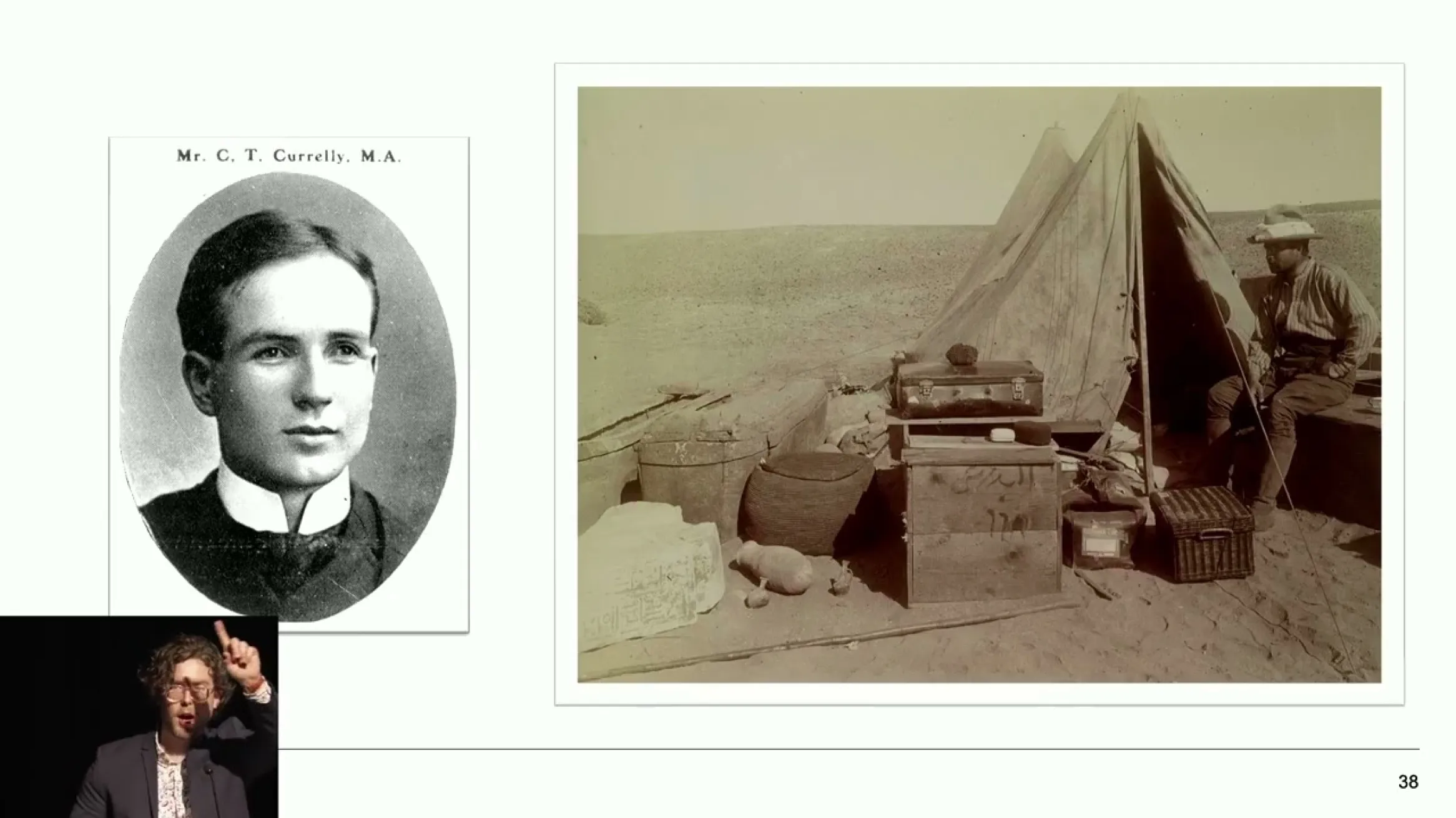
The Massey Legacy: Rediscovering the Methodist Beginnings of Collections at ROM
Talk
For thousands of years, Lake Ontario supported Atlantic Salmon (LOAS) sustained innumerable Indigenous communities, and their bones are commonly found at archaeological sites around the lake.
Lured by the promise of unlimited natural resources, rapid settlement by Europeans during the 19th century brought intensive shoreline development, dams and mills on spawning rivers, and overharvesting, leading to the collapse and eventual disappearance of the LOAS by the turn of the twentieth century. In the 1940s and 1950s the ecological role once occupied by the LOAS was instead filled by introduced Pacific salmonid species, which now dominate recreational fisheries across the Great Lakes.
Ongoing research in the Fish Division at the Museum is using ancient DNA to rediscover the lost biology of Lake Ontario’s original salmon. By extracting and sequencing whole genomes from 600-year-old salmon bones recovered from a Huron-Wendat archaeological site near present-day Oshawa, Ontario, we are reconstructing the history of the extinct LOAS. Learn more about this ground-breaking interdisciplinary research, developed in partnership with the Huron-Wendat Nation, and gain a better understanding of exciting preliminary insights into the history of a fish that shaped the human and ecological history of Lake Ontario.
A Fish that Fed Nations: Rediscovering Lake Ontario's Extinct Atlantic Salmon
Talk
The antiquities that you see today in the galleries of Ancient Greece & Rome at ROM didn’t begin their life in Canada, but they now play an important role in connecting local communities to the Museum. Just like many of us, they came from abroad and are examples of the global cultural and artistic heritage that draws Canadians to institutions like ROM to learn and understand. How did certain objects come to the Museum, and why does understanding the history of their collection matter to us?
In this talk we explore the importance of provenance- understanding when, where, and how Museum objects have arrived here- through the stories of two iconic ROM painted panels made in Roman Egypt. Once owned by the same British collector, then sent to separate Canadian institutions before being ‘re-united’ at ROM in 2018, this talk reveals their stories, from their ancient creation and use to their 19th century discovery and journey to Ontario. These ancient portrait panels are currently being studied as part of the international APPEAR ancient panel-painting research project.
From Egypt to Toronto: Fayum Portraits at ROM
2026 Vaughan Lecture
Celebrate the importance of local ecology with the new acquisition, by ROM, of materials associated with the Niagara Escarpment Ancient Tree Atlas Project Archive (NEATAP). Consisting of tree samples from the ancient cedar forests of the Niagara Escarpment cliffs, this archive will support future cutting-edge research on the climatic and ecological history of this region.
Facilitated by Deborah Metsger, the donation of this crucial record of Ontario’s past now forms a cornerstone of the work the Museum does to understand long-term environmental changes, ensuring ROM’s place in local, globally significant research for years to come. Recording thousands of years' worth of climatic variations, this archive’s new permanent home at ROM solidifies the Museum’s place as a national caretaker for Canada's environmental heritage.
2026 Vaughan Lecture Ancient Niagara: Preserving Thousands of Years of Climate Records at ROM
Related exhibitions

Related activities