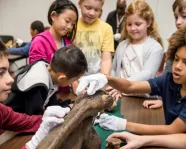
Project: Museum Minecraft: Sustainable Style


- Category
- Classroom/At Home Activity
- Duration
-
2-10+ hours
- Audience
- Educators, Students
- Age
-
7-18
- Grades
- 3-12
- Subjects
- Art & Culture, General, Indigenous, Science, Science & Technology, Social Sciences & Humanities, Social Studies, The Arts
About this resource
Use the power of Minecraft to learn about fast fashion, climate change ,and sustainability, and transform a community into a more sustainable place to live.
In Museum Minecraft: Sustainable Style, your students find themselves trapped on a sunken ship escape room. The clues to their escape lie in a virtual re-creation of the Noelle Hamlyn: Lifers exhibition and other galleries at ROM, where they will discover climate change and sustainability problems and solutions that will unlock the doors to freedom.
Along the way, they will need to use code to instruct their friendly Minecraft agent to help them clear a path to the next stage of the escape room.
Once the escape room is complete, students will teleport back to their hometown, where they can participate in a series of activities of your choosing to deepen their climate change and sustainability knowledge before the culminating activity: to transform the town school (or the entire community – your choice!) to be a more sustainable place to live.
This project is fully scalable and customizable. You can have students participate independently, in small groups, as a full class. You can also choose how many or how few activities to do – you can even choose whether to participate in the escape room, or skip to the community activities.
Supported by robust Teacher and Student support sites, this activity leverages the intrinsic motivational learning power of one of your students’ favourite game platforms to immerse students in an engaging world of sustainability that will have students passionately striving to make the world better one block at a time.
Learning Goals
Examine how modern practices, with an emphasis on fast fashion, impact the physical and biological environments.
Understand that the burning of fossil fuel is a key driver of current changes in global climate.
Understand how some Indigenous ways of knowing provide sustainable solutions to some of these problems.
Demonstrate student learning by using Minecraft to rebuild a school or town into a more sustainable place to learn or live.
Highlights


Curriculum Connections
Mathematics
- Algebra - Coding and Mathematical Modelling
- Data – Data Literacy
- Financial Literacy
Science
- STEM Skills and Connections – Coding and Emerging Technologies
- Life Systems – Growth and Changes in Plants
- Structures and Mechanisms – Strong and Stable Structures
The Arts
- Music
- Visual Arts
Social Studies
- People and Environments
Mathematics
- Algebra – Coding and Mathematical Modelling
- Data – Data Literacy
- Financial Literacy
Science
- STEM Skills and Connections – Coding and Emerging Technologies
- Life Systems – Habitats and Communities
- Matter and Energy – Light and Sound
- Structures and Mechanisms – Machines and Their Mechanisms
The Arts
- Music
- Visual Arts
Mathematics
- Algebra – Coding
- Data – Data Literacy
- Financial Literacy
Science
- STEM Skills and Connections – Coding and Emerging Technologies
- Matter and Energy – Properties of and Changes In Matter
- Earth and Space Systems – Conservation of Energy and Resources
The Arts
- Music
- Visual Arts
Social Studies
- People and Environments
Mathematics
- Algebra – Coding
- Data – Data Literacy
- Financial Literacy
Science
- STEM Skills and Connections – Coding and Emerging Technologies
- Life Systems – Biodiversity
- Matter and Energy – Electrical Phenomena, Energy, and Devices
The Arts
- Music
- Visual Arts
Social Studies
- Heritage and Identity: Communities in Canada, Past and Present
Mathematics
- Algebra – Coding
- Data – Data Literacy
- Financial Literacy
Science
- STEM Skills and Connections – Coding and Emerging Technologies
- Life Systems – Interactions in the Environment
- Structures and Mechanisms – Form, Function, and Design of Structures
- Earth and Space Systems – Heat in the Environment
The Arts
- Music
- Visual Arts
Geography
- Physical Patterns in a Changing World
- Natural Resources Around the World: Use and Sustainability
Mathematics
- Algebra – Coding
- Data – Data Literacy
- Financial Literacy
Science
- STEM Skills and Connections – Coding and Emerging Technologies
- Structures and Mechanisms – Systems in Action
- Earth and Space Systems – Water Systems
The Arts
- Music
- Visual Arts
Geography
- Global Inequalities – Economic Development and Quality of Life
Mathematics
- Algebra - Coding
Science
- Biology – Sustainable Ecosystems and Climate Change
- Chemistry – The Nature of Matter
- Physics – Principles and Applications of Electricity
The Arts
- Integrated Arts
Science
- Chemistry – Chemical Reactions
- Earth and Space Systems – Climate Change
The Arts
- Media Arts
First Nations, Métis, and Inuit Studies
- First Nations, Métis, and Inuit in Canada
Social Sciences and the Humanities
- Family Studies – Clothing
Science
- Biology – Diversity of Living Things; Plants in the Natural Environment
- Chemistry – Matter, Chemical Trends, and Chemical Bonding; Chemical Reactions; Gases and Atmospheric Chemistry
- Environmental Science
- Physics – Energy and Society; Electricity and Magnetism
First Nations, Métis, and Inuit Studies
- Contemporary First Nations, Métis, and Inuit Issues and Perspectives
Social Sciences and the Humanities
- Family Studies – Understanding Fashion
Science
- Biology – Population Dynamics
- Chemistry – Organic Chemistry; Energy Changes and Rates of Reaction; Chemistry in the Environment
- Physics – Electricity and Magnetism; Energy Transformations; Electricity at Home and Work
First Nations, Métis, and Inuit Studies
- Contemporary Indigenous Issues and Perspectives in a Global Context
Canadian and World Studies
- Geography – Living in a Sustainable World; Environment and Resource Management
Social Sciences and the Humanities
- Family Studies – The World of Fashion
Language Support
While we work on the official translations for the Museum Minecraft worlds, you can use this video to learn how to change the Game Language and Coding Language, as well as how to auto-translate any in-game dialogue, boards, or books using the Immersive Reader.
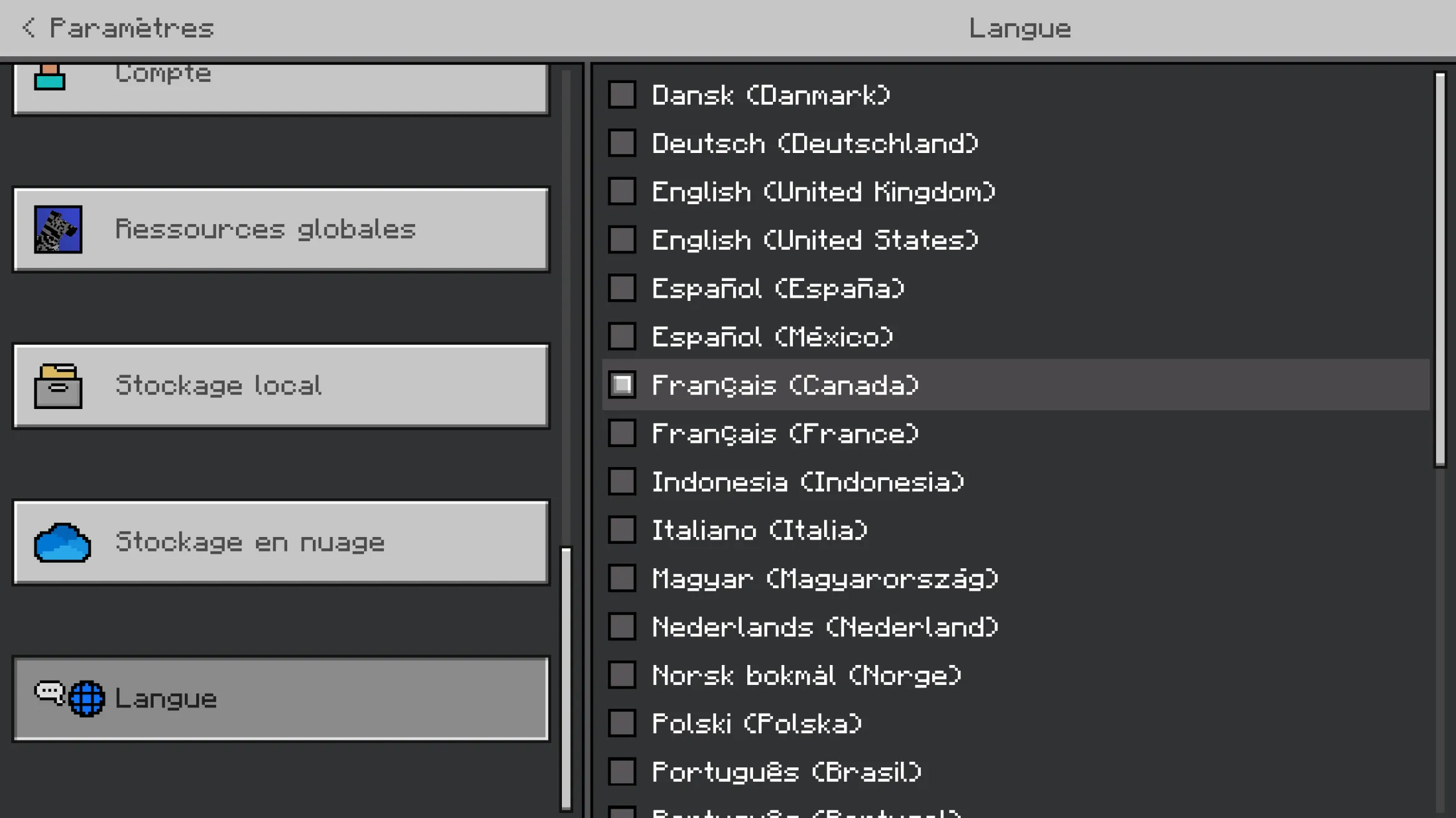
Minecraft Education Support - Immersive Reader and Game Language
Preparation
Preparation:
- Students should be comfortable with the basics of Minecraft, including movement and the breaking and placing of blocks.
- Have students open a browser to joinmyquiz.com just before the session, and enter the join code that will be posted in the pre-show before the lesson begins. This will allow you and your students to communicate with the Museum Educators during the live lesson.
New to Minecraft?
We recommend that students are familiar with the basic Minecraft controls taught in the How to Play tutorials in the Minecraft Lesson Library, particularly:
- How to Play: Movement (Keyboard and Mouse / Touchscreen)
- How to Play: Break and Place (Keyboard and Mouse / Touchscreen)
You can also check out our New to Minecraft section on our Minecraft Program Support site.
Requirements
Class set of devices with Minecraft Education installed.
Minecraft Licenses are not provided by ROM. They must be provided by your school or board, or through the Camps and Clubs program for homeschool or other educators.
Ensure that https://joinmyquiz.com and https://wayground.com/join are accessible from student devices and whitelisted if necessary before the date of your program.
Lesson Supports
- Teacher Support Site - Includes walkthrough, Student activity guides and solutions, and troubleshooting
- Student Site – Includes challenge hints and step-by-step activity instructions
- Minecraft 101 for Teachers – Play-along How-to-Play lesson for teachers
- Teacher Coding Camp – Play-along Coding lesson for teachers
Related activities