Gallery Trail: Dinosaur Discoveries


Category
Audience
Age
Grades
Subjects
About Gallery Trails
Gallery Trails are designed to be used with an onsite visit or with a virtual exhibition. These choice-focused, student-centric resources help structure and record your students’ learning in the exhibition or gallery. Activities address key themes of each exhibition or gallery while still allowing students the freedom to focus on and learn about objects or belongings that are of interest to them.
Gallery Trails can be done individually or in small groups, according to students’ needs and preferred learning styles. They can be done by a broad range of ages and grades, scaling in the responses rather than the questions. Each Gallery Trail also includes extensions to be done back in the classroom, to reinforce and lock in student learning.
They are available in multiple editable formats so that they can also be customized and remixed to meet the needs of your class.
If your students would do better with a more guided approach to gallery exploration without a written component, consider using a related Seek & Find activity.
Gallery Info
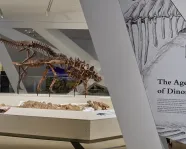
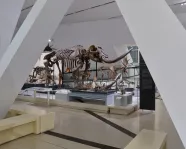
The James and Louise Temerty Galleries of the Age of Dinosaurs and the Reed Gallery of the Age of Mammals feature an amazing collection of some of the most incredible fossils on display in Canada.
From tiny insects to giant sloths, from baby maiasaura to an enormous Tyrannosaurus rex, every display tells a story of prehistoric life on Earth.
The newly-renovated galleries feature some all-new dinosaurs and displays, including a ferocious battle between the giant carnivore Gorgosaurus and Zuul crurivastanor – a massive, armoured dinosaur that was recently excavated and named by scientists at ROM.
Downloads
Museum Guidelines
Walk. Don't run.
Use indoor voices.
Stay with your adult.
Don’t touch objects or belongings. Only touch objects that are clearly marked as safe to touch
Don’t rush. Focus your time on the objects that interest you and do what you can in the time you have.
Make way for Museum Educators if they need a space for a lesson.
Ask questions and have fun!
Learning Goals
Confirm, correct, or expand students' pre-existing knowledge about dinosaurs.
Compare and contrast characteristics of herbivores and carnivores.
Identify and explain characteristics of specific dinosaurs that make them well-suited to their role in their environment.
Apply learning by designing an original dinosaur.
Fast Facts
- The Age of Dinosaurs gallery contains fossils from the Jurassic (200 to 145 million years old) to the Cretaceous (145 to 65 million years old) periods.
- The Age of Mammals Gallery represents living things from the Cenozoic Era (approx. 65 million years ago) to the present day.
- Zuul’s fossil contains fossilized skin! That’s super-rare, usually just hard parts like bones and teeth become fossils.
- Fossils of mammoths may have inspired the legend of cyclops.
- Hadrosaurs lived in large herds of thousands of individuals.
Please Note
If remixing or modifying, please credit “adapted from a resource by ROM.”
Highlights


Curriculum Connections
Language
- Composition: Expressing Ideas and Creating Texts
Science
- Life Systems – Growth and Changes in Animals
Visual Arts
- Creating and Presenting
Language
- Composition: Expressing Ideas and Creating Texts
Science
- Life Systems – Growth and Changes in Plants
Visual Arts
- Creating and Presenting
Language
- Composition: Expressing Ideas and Creating Texts
Science
- Earth & Space Systems – Rocks & Minerals
- Life Systems – Habitats and Communities
Visual Arts
- Creating and Presenting
Language
- Composition: Expressing Ideas and Creating Texts
Science
- Life Systems – Organ Systems
Visual Arts
- Creating and Presenting
Language
- Composition: Expressing Ideas and Creating Texts
Science
- Life Systems – Biodiversity
Visual Arts
- Creating and Presenting
Language
- Composition: Expressing Ideas and Creating Texts
Science
- Life Systems – Interactions in the Environment
Visual Arts
- Creating and Presenting
Language
- Composition: Expressing Ideas and Creating Texts
Science
- Life Systems – Cells
Visual Arts
- Creating and Presenting
English
- Composition: Expressing Ideas and Creating Texts
Science
- Biology – Sustainable Ecosystems and Climate Change
The Arts
- Visual Arts – Creating and Presenting
- Integrated Arts – Creating and Presenting
English
- Composition: Expressing Ideas and Creating Texts
Science
- Biology – Tissues, Organs, and Systems
- Earth and Space Science – Climate Change
The Arts
- Visual Arts – Creating and Presenting
English
- Composition: Expressing Ideas and Creating Texts
Science
- Biology
The Arts
- Visual Arts – Creating and Presenting
English
- Composition: Expressing Ideas and Creating Texts
Science
- Biology
The Arts
- Visual Arts – Creating and Presenting
Related activities